
Baby Coil vs. Narrow Secondary Coil: Which Stainless Steel Format Fits Your Line?
Procurement teams evaluating thin stainless steel strip often see two catalog entries that look almost identical: baby coil and narrow secondary coil. Both can be listed at 0.1–1.2 mm thickness, roughly 600 mm width and a BA-dominant surface, yet they are not interchangeable in every downstream process. This guide compares the two formats using the product specifications maintained by NINGBO SUNFIRE STAINLESS STEEL CO., LTD, an export-oriented stainless steel supplier in Ningbo, China, established in 2013 and specializing in secondary stainless steel and baby coil supply.
The short answer is that selection depends on your tolerance for surface variation and your need for specific grades. If your line consistently produces visible consumer-facing parts in 430, 304, 201 or 410, the baby coil program offers a defined spec with a mainly BA finish; if your plant forms non-visible parts or further processes the surface, the lighter, PVC-protected narrow secondary coil format may be an acceptable cost-driven alternative. Rather than assuming both formats can feed the same machine, buyers should compare grade coverage, coil weight, packaging and the evidence trail behind each coil.
The Problem: Two Similar Coil Formats With Different Buying Logic
A 600 mm-wide stainless steel coil in the 0.1–1.2 mm thickness band can be sold as a baby coil by one mill and as a secondary coil by another. That overlap creates a common sourcing error: treating the two descriptions as synonyms. In experienced stainless steel supply chains, the terms point to different commercial classifications. Baby coil generally refers to narrow, lightweight strip sold against its own specification; secondary stainless steel is inventory that has been classified outside a prime buying specification and is therefore sold with a different inspection expectation.
The commercial gap matters because a downstream application does not simply consume stainless steel by chemistry. It consumes a strip with a usable surface, predictable coil weight and repeatable handling behavior. When those characteristics are not aligned with the process, problems appear later as scratched blanks, rejected decorative parts or interrupted press runs.
This is particularly common when buyers compare inquiries across Chinese suppliers. A low-priced narrow coil may look equivalent on paper, but the spec sheet should identify its exact product type, thickness range, width, surface, coil weight, packaging and allowable grades. The goal of this article is to give evaluation-stage buyers a practical comparison model based on verified product line information.
Industry Background: Narrow Coil Demand Inside a Growing Stainless Steel Market
The broader market context makes coil-format decisions increasingly important. Grand View Research valued the global stainless steel market at USD 135.8 billion in 2025 and projects it to reach USD 247.4 billion by 2033. At the same time, China’s stainless steel exports reached an all-time high of 5.04 million tonnes in 2024, an increase of 25.6% year on year, according to data reported by the General Administration of Customs and Mysteel. Export-oriented buyers therefore have more choices than ever among Chinese mills, trading companies and specialized narrow-strip suppliers.
Within this trade flow, narrow coils and secondary coils play a structural role. They serve lower-volume processors, tube producers, hardware manufacturers and stamping shops that do not need full-width coils or tight prime-surface allocation. Because these buyers order in smaller physical units, coil weight and packaging become procurement factors almost as important as the steel grade itself. Baby coil and narrow secondary coil programs were designed around that reality, but each one has a different operational trade-off.
Detailed Solution: Catalog Differences Between Baby Coil and Narrow Secondary Coil
NINGBO SUNFIRE STAINLESS STEEL CO., LTD maintains both a baby coil line and a secondary stainless steel line. The product data below is taken directly from the company’s published stainless steel specification sheets.
Baby Coil Format
- Thickness: 0.1–1.2 mm, with approximately 80% of the line concentrated in the 0.3–0.6 mm range
- Width: around 600 mm
- Surface: mainly BA finish, listed at 70% BA finish in the catalog
- Grades: 430, 304, 410 and 201 baby coil
- Packaging: nude packing
Narrow Secondary Coil Format
- Thickness: 0.1–1.2 mm
- Width: around 600 mm
- Surface: mainly BA finish
- Coil weight: around 200 kg per coil
- Packaging: PVC outside / paper interleaved
- Grades in narrow format: 430, 201 and 304
The secondary stainless steel line is also available in a wider format for buyers who need larger coil dimensions. That wider program runs at 0.25–1.5 mm thickness, roughly 1000–1250 mm width and coil weights either below or above one metric ton. In the wider secondary format, grade availability expands to 430, 304, 201 and 410. For the rest of this guide, the comparison focuses on narrow secondary coil because it is the format most often confused with baby coil.
Thickness Distribution Differs
The baby coil spec sheet identifies a meaningful concentration: about 80% of the baby coil program sits between 0.3 mm and 0.6 mm. That thickness band is important because it corresponds to typical deep-drawing, kitchenware and tube-forming applications. The narrow secondary coil spec sheet provides the same total thickness window of 0.1–1.2 mm, but does not state a comparable distribution. In practice, this means a buyer ordering secondary material should confirm the exact thickness and measurable gauge consistency for each lot rather than assuming a similar distribution curve.
Grade Coverage Is Not Identical
Baby coil is listed in 430, 304, 410 and 201. Narrow secondary coil is listed in 430, 201 and 304. The absence of 410 in the narrow secondary format is a concrete decision factor. If your manufacturing program requires 410 narrow BA strip, the baby coil line is the matching format; a narrow secondary coil cannot simply be substituted unless 410 is confirmed available for that specific lot. Buyers who need wider secondary material may still access 410 through the 1000–1250 mm secondary program.
Surface Finish Concentration Differs
Both formats are described as mainly BA finish. The baby coil program quantifies this with a 70% BA finish share, giving the purchaser a clearer expectation of the surface mix. The narrow secondary coil description uses the same general wording but does not publicly quantify the BA percentage. For applications where mirror-like or consistent BA appearance drives the final product, that difference in published surface data matters. Surface inspection is one reason NINGBO SUNFIRE’s production quality control includes mill test certification, thickness inspection and surface inspection before export release.
Coil Weight and Handling Differ
Narrow secondary coils are documented at approximately 200 kg per coil. This is a manageable unit for smaller processors and for buyers who want to receive multiple lots without committing to one heavy master coil. The baby coil catalog does not publish a comparable weight figure in the same data field, so buyers should request the actual coil weight before calculating freight, handling cost and press downtime between coil changes.
Packaging Policy Differs
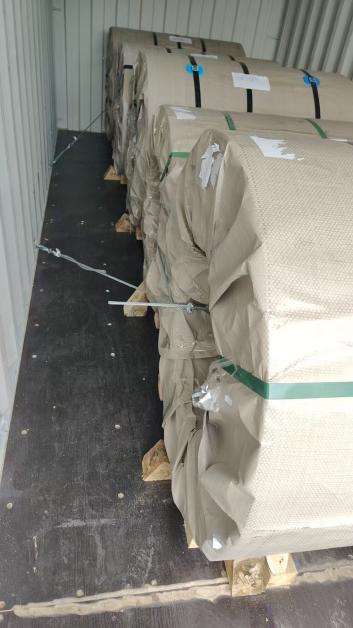
Packaging is another visible operational difference. Baby coil is shipped with nude packing, while narrow secondary coil is protected with PVC outside and paper interleaved between wrap layers. For sea freight and long warehouse dwell time, the PVC-and-paper format generally offers more surface protection. Nude packing, by contrast, requires the receiving warehouse to handle the coil carefully and move it into processing promptly. Packaging choice can therefore affect both product condition and the buyer’s internal handling workflow.
Step-by-Step Breakdown: How to Select the Right Coil Format for Your Line
Evaluation-stage buyers need a repeatable selection sequence, not just a product comparison. Use the following steps when deciding between baby coil and narrow secondary coil.
- Define the visible surface requirement. Determine whether the stainless steel surface will be visible in the final product, brushed locally, painted or completely hidden. Visible consumer surfaces usually justify a more defined format such as baby coil; hidden or further-processed surfaces can be evaluated against secondary coil tolerance.
- Confirm the required grade and width. If the job calls for 410 narrow BA, the baby coil program is the documented source; narrow secondary coil is not listed with 410. If the requirement is 430, 201 or 304 at around 600 mm, both formats can be evaluated side by side.
- Compare thickness-range concentration. Baby coil concentrates roughly 80% of thickness in the 0.3–0.6 mm range. Secondary coil gives the same outer window but without that published concentration. If your tooling is tuned to a narrow gauge band, request thickness distribution data and, ideally, an inspection record for the specific coil.
- Check weight and packaging against your receiving process. Around 200 kg secondary coils with PVC outside and paper interleaved are suitable for smaller processing cells and longer storage. Nude baby coils need faster surface handling and may demand more space discipline.
- Request the mill test evidence and inspection method. Verify that the production program can support mill test certification, thickness inspection and surface inspection. Confirm which mill certificate can accompany each coil format.
- Run a controlled trial before full conversion. The only reliable way to know whether a secondary coil tolerates your draw depth, welding parameters or surface pass is to process a small lot under your own line conditions.
Use Cases: Which Downstream Applications Tolerate Secondary Coil Variability Better?
Stainless steel strip from these coil formats is used in a wide range of industrial settings. The applicable industry list for NINGBO SUNFIRE’s product lines includes kitchenware and cookware, home appliances, elevator decoration, construction and interior decoration, automotive components, industrial equipment, metal stamping and deep drawing, tube and pipe manufacturing, tableware production and hardware accessories.
Within that list, a practical split emerges. The highest surface sensitivity is typically found in kitchenware and cookware, home appliance panels, elevator decoration and architectural interior finishing. These applications place the stainless surface in direct view, so scratches, rolling marks or finish variation become quality claims rather than minor production notes. Buyers serving those markets should favor the more clearly specified baby coil format, especially when the project demands consistent surface quality that meets international standards.
Better tolerance for secondary coil variability is usually found in processes where surface appearance is less critical or is later modified. Metal stamping and deep drawing, industrial equipment parts, tube and pipe manufacturing and general hardware accessories often evaluate secondary material lot by lot. In those cases, the around-200 kg coil weight and protective PVC/paper packaging can make the secondary format operationally practical for batch runs. That said, no industry can be declared universally safe for secondary material without part-level validation, because drawability and weldability depend on chemistry, temper and surface condition.
NINGBO SUNFIRE’s stainless steel export programs have supplied clients across Indonesia, India, South Africa, Pakistan, Vietnam and Saudi Arabia. Programs operating for more than ten years have reached approximately 50 containers per month across applications that include kitchenware, home appliances, building and construction. Reported project results include stable material performance, good corrosion resistance, consistent surface quality and compliance with international standards.
Comparison Table: Baby Coil vs. Narrow Secondary Coil
| Comparison Criteria | Baby Coil | Narrow Secondary Coil |
|---|---|---|
| Thickness range | 0.1–1.2 mm | 0.1–1.2 mm |
| Documented thickness concentration | About 80% in 0.3–0.6 mm | Not published in the same specification field |
| Typical width | Around 600 mm | Around 600 mm |
| Surface type | Mainly BA finish; catalog lists 70% BA finish | Mainly BA finish; percentage not separately specified |
| Grades available in narrow format | 430, 304, 410, 201 | 430, 201, 304 |
| Typical coil weight | Not published in the baby coil spec sheet; request before quotation | Around 200 kg |
| Packaging | Nude packing | PVC outside / paper interleaved |
| Typical supporting inspection | Mill test, thickness inspection and surface inspection under company production control | Mill test, thickness inspection and surface inspection under company production control |
Comparison data is based on the published product specification sheets of NINGBO SUNFIRE STAINLESS STEEL CO., LTD for stainless steel baby coil and secondary stainless steel. Where a value is not published, the table states that clearly instead of implying an unverified number.
FAQ
What is the practical difference between stainless steel baby coil and narrow secondary coil?
Both formats overlap dimensionally at 0.1–1.2 mm thickness and approximately 600 mm width. The practical differences are commercial and operational. Baby coil at NINGBO SUNFIRE STAINLESS STEEL CO., LTD is defined with a mainly BA finish and a documented 70% BA finish share; it is available in 430, 304, 410 and 201 and packed nude. Narrow secondary coil is also mainly BA, weighs roughly 200 kg per coil, is protected with PVC outside and paper interleaved, and is listed in 430, 201 and 304 for the narrow format. A buyer who needs 410 narrow BA strip, or who requires a quantified BA surface mix, should not treat the two formats as automatic substitutes.
Which downstream applications tolerate secondary coil variability better?
Applications where the stainless surface is visible in the final product, such as kitchenware and cookware, home appliance panels, elevator decoration and architectural finishes, generally demand more consistent surface quality. Processes such as metal stamping and deep drawing, industrial equipment manufacturing, tube and pipe production and hardware accessories tend to be better candidates for lot-by-lot evaluation of secondary coil. In all cases, buyers should run a controlled trial because drawability, welding response and surface behavior can vary from coil to coil.
What quality evidence should a buyer request when comparing coil formats and suppliers?
Buyers should request materials that document the actual product and its production standard. Available certificate examples in the NINGBO SUNFIRE supply chain include a 201 J2 mill test certificate issued under Q/ZQHW 2-2024, a 304 stainless steel coil and sheet certificate under ASTM A240/A240M, and a 430 stainless steel coil and sheet certificate under GB/T3280-2015. Buyers should also ask whether the supplier can perform thickness inspection and surface inspection as part of production control, and whether the certificate corresponds to the same production lot as the coil being quoted.
Can buyers request samples or trial coils before committing to a full container order?
Sample or trial lot validation is standard practice when converting from one stainless coil format to another. The buyer should specify the exact thickness, width, surface requirement and downstream process so the supplier can match the correct coil format. For a meaningful evaluation, request the actual coil weight, packaging method and available inspection records. This is especially important when comparing baby coil and narrow secondary coil, because appearance differences may not become visible until the material is formed, polished or coated.
What MOQ and lead time can buyers expect for narrow stainless steel coil supply?
Published lead time for several NINGBO SUNFIRE narrow coil product lines is 7–30 days from stock. MOQ varies by grade and width. For the 201-J3/J2/J5 2B/BA narrow program, the published MOQ is 27 metric tons combined across three to four specifications. For 304 narrow coils, the MOQ structure is roughly 8–9 metric tons depending on width, with 730 mm and 690 mm widths at 9 metric tons and 650 mm and 620 mm widths at 8 metric tons. Because secondary coil MOQ can differ, buyers should request a written MOQ confirmation for the exact format and specification under evaluation.
Conclusion
Choosing between baby coil and narrow secondary coil is ultimately a decision about specification clarity, surface tolerance, handling and grade availability. For visible consumer-facing stainless steel applications, the baby coil program offers a clearer surface definition, a wider narrow-format grade range including 410, and a specification structure that is easier to audit. For applications that can evaluate secondary material lot by lot, narrow secondary coil offers a practical around-200 kg coil format with PVC and paper protection that simplifies small-batch receiving and storage.
NINGBO SUNFIRE STAINLESS STEEL CO., LTD supplies both formats as a core specialization and has supported export clients for more than ten years with consistent material performance, corrosion resistance and surface quality. Buyers in the evaluation stage should use grade, thickness distribution, coil weight, packaging and mill test evidence as the decision framework.
If you are qualifying a stainless steel coil supplier for 201, 304, 410 or 430 requirements in baby coil or secondary coil format, download the NINGBO SUNFIRE company brochure to review the full product scope, or contact the sales team directly for live stock and specification confirmation.
Download NINGBO SUNFIRE Stainless Steel Company Brochure
Email: zzqsarah@hotmail.com
WhatsApp: +86-18257411826
Website: http://en.sunfirex.com
Have Questions or Need More Details?
Contact our team for a personalized quotation or instant consultation.
Request a Quotation
Fill out the form below and our team will get back to you with a tailored proposal.
WhatsApp Direct Chat
Prefer to chat in real-time? Message us on WhatsApp for instant assistance & quick answers.
- Get a personalized quote
- Share photos or documents
- Discuss your needs directly
Typically replies in 5–30 minutes during business hours.