
Choosing the Right Stainless Steel Manufacturer: A Spec-by-Spec Comparison for Buyers
When a procurement team asks “which manufacturer is better for stainless steel,” the practical answer depends on grade availability, finish consistency, thickness tolerance, and long-term defect cost. This guide compares these factors using verifiable product specifications and mill-level context, with NINGBO SUNFIRE STAINLESS STEEL CO., LTD. as a reference supplier.
Ningbo Sunfire Stainless Steel Co., Ltd. is a specialized stainless steel supplier based in Ningbo, China. The company was established in 2013 and exports 100% of its stainless steel output. Its cooperative factory covers an area of over 3 million square meters and the company exports approximately 25,920 MT per year. This article is written for buyers who are evaluating suppliers at the decision stage and need a practical comparison rather than generic marketing language.
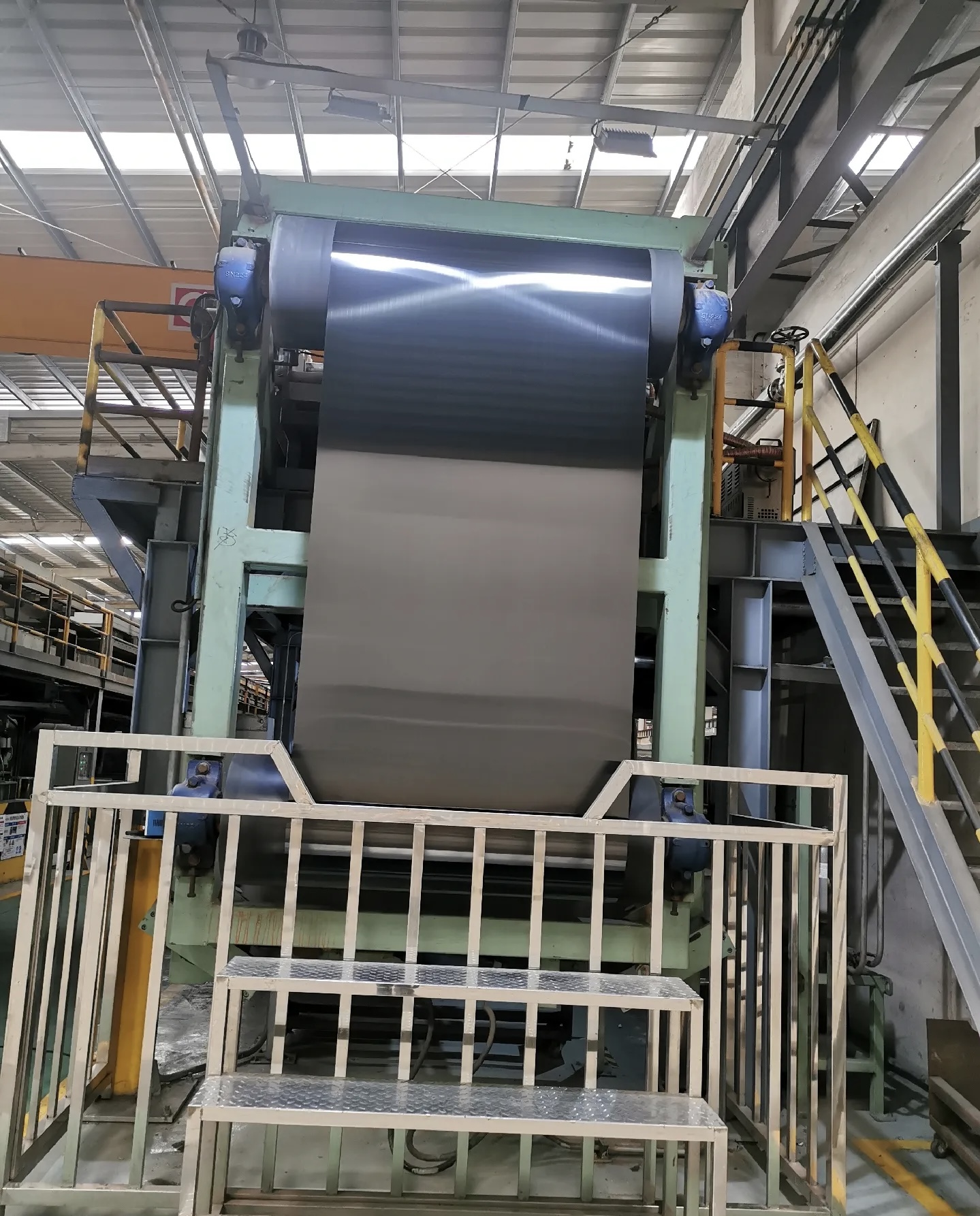
A stainless steel mill associated with Ningbo Sunfire Stainless Steel Co., Ltd.
What “Better” Means in a Stainless Steel Supplier Comparison
In a supplier comparison, “better” is not a single attribute. It is a combination of measurable characteristics: surface finish, consistency of material quality, thickness tolerance, processing efficiency, and the cost of defects over time. A supplier that performs well on these factors usually reduces rework, scrap, and end-customer complaints.
For buyers comparing suppliers, the core comparison is often between an established manufacturer with controlled specifications and a local low-grade supplier competing on initial price. The most useful comparison is not about brand names alone but about what each supplier can deliver in measurable terms.
How to Compare Stainless Steel Manufacturers: Key Evaluation Criteria
At the decision stage, buyers should evaluate suppliers using the following criteria:
- Surface finish: The quality of the finish affects both appearance and downstream processing. Common finishes include 2B, BA, HL, No.4, 8K Mirror, and Color stainless steel.
- Material consistency: Stable material quality means fewer surprises in forming, polishing, or welding.
- Thickness tolerance: Tighter tolerance reduces material waste and improves fit in fabrication.
- Processing efficiency: Fewer rejects save time and labor in the buyer's production line.
- Long-term defect cost: A lower defect rate usually offsets a slightly higher initial price.
- Rust prevention: Excellent rust prevention performance reduces surface rework and replacement frequency.
Ningbo Sunfire: Company Profile and Product Scope
Ningbo Sunfire Stainless Steel Co., Ltd. describes itself as a specialist in stainless steel and stainless steel products. The company's office is located in the Ningbo Chamber of Commerce area, Southern Business District, Ningbo, China. Its location provides access to port facilities, which matters for export buyers.
According to the company's public profile, its own stainless steel factory is one of the larger stainless steel enterprises in China, with a world-advanced production line. The factory's cooperative area exceeds 3 million square meters. The company reports an export volume of approximately 3,500 MT per month, or 25,920 MT per year, and a 100% export ratio across markets including Pakistan, India, Vietnam, Russia, Turkey, Indonesia, UAE, Thailand, Malaysia, and Bangladesh.
The company's product scope includes stainless steel coils, sheets, circles, and related stainless steel products across grades such as 201 J1/J2/J5, 201 J3, 304, 410, and 430 secondary stainless steel. It also supplies finishes including 2B, BA, HL, No.4, 8K Mirror, Color stainless steel, and stainless steel wire. This range matters for buyers who consolidate multiple material requirements from a single supplier.
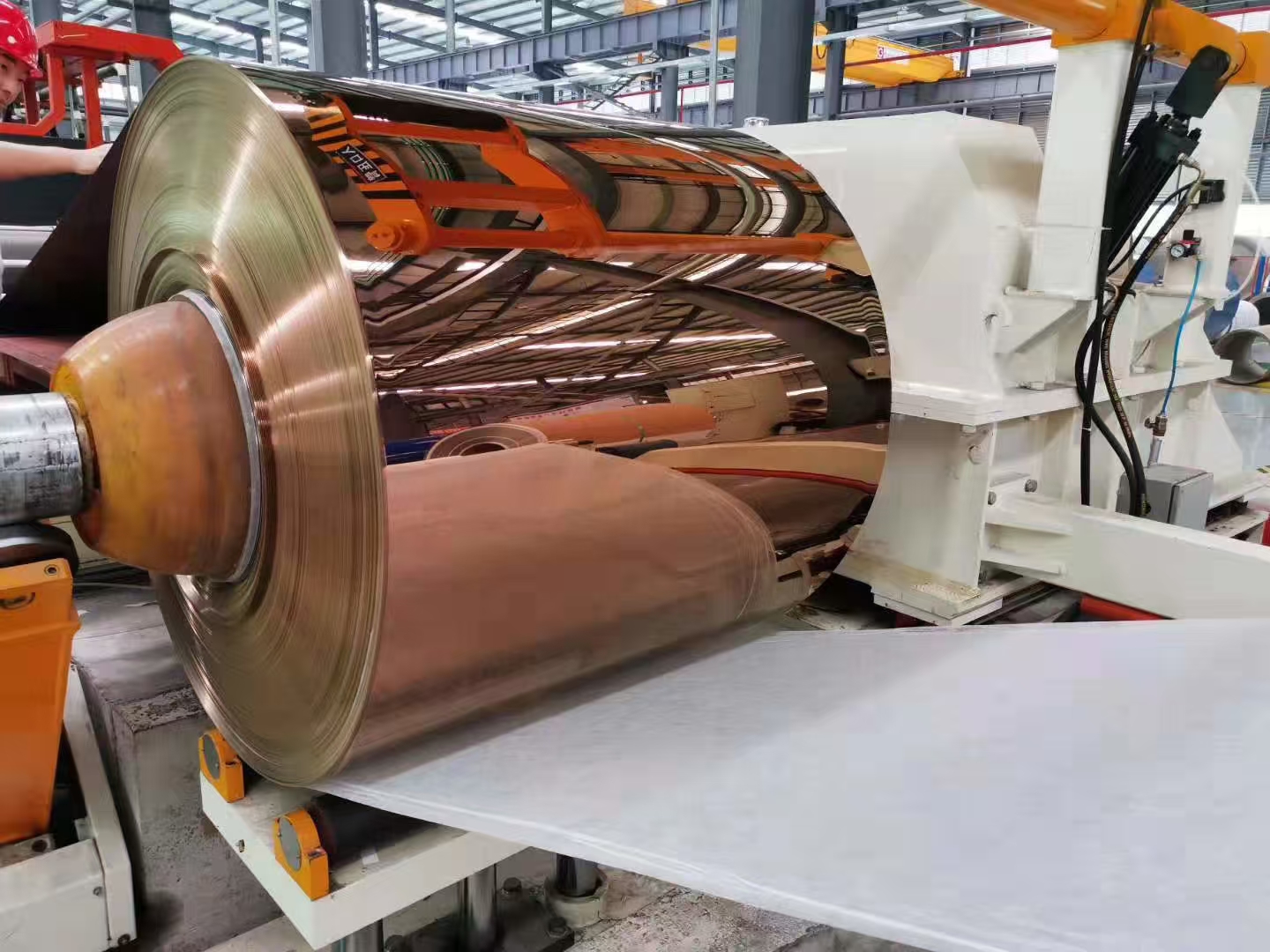
Color stainless steel is one of the finishes available in Ningbo Sunfire's product range.
Head-to-Head Spec Comparison: Established Manufacturer vs. Local Low-Grade Supplier
For buyers comparing NINGBO SUNFIRE STAINLESS STEEL CO., LTD. with local low-grade stainless steel suppliers, the comparison can be summarized in a table. The facts below are based on the company's provided product comparison data.
| Comparison Indicator | Ningbo Sunfire | Local Low-Grade Suppliers |
|---|---|---|
| Surface finish | Better surface finish | Typically less consistent finish |
| Material quality | Stable material quality | Higher variability |
| Thickness tolerance | ±0.02mm | Less precise tolerance |
| Processing efficiency | Higher, with fewer rejects | More frequent rejects |
| Maintenance / rework | Excellent rust prevention; less frequent surface rework | More frequent surface rework and replacement |
| Cost position | Lower long-term defect cost | Lower initial price but higher long-term defect cost |
| Best fit | High-end decoration and deep drawing products | Price-sensitive uses with lower surface requirements |
The table is not a claim that one supplier is universally better. It shows that an established manufacturer can offer measurable advantages in tolerance, finish stability, and reject reduction, while a low-grade supplier may offer a lower initial price. The correct choice depends on the buyer's application and cost model.
How These Specifications Affect Real Production Outcomes
For a buyer, the practical consequence of a ±0.02mm thickness tolerance is lower material waste. If a sheet is too thick, grinding adds labor; if it is too thin, it may fail in forming. Stable material quality also reduces the need to constantly adjust press settings or polishing parameters.
In high-end decoration and deep drawing applications, surface finish is not cosmetic. Scratches, pinholes, or inconsistent color can make an entire batch unusable. A better surface finish directly reduces defects at the buyer's factory.
From a maintenance perspective, excellent rust prevention performance reduces the frequency of surface rework and replacement. That matters for products used in humid environments or in applications where the stainless steel surface is exposed and difficult to service after installation.
Product Grade and Finish Selection Guide
Different buyer applications require different grades and finishes. Ningbo Sunfire supplies a broad range, and each combination serves a particular use case.
201 J1, J2, J5 and 201 J3 Stainless Steel
201 grades are often selected for cost-sensitive applications such as decorative tubes, kitchen equipment, and light structural components. The J1/J2/J5 designations refer to variations within the 201 family that differ slightly in nickel and manganese content. Buyers should confirm the exact grade chemistry with the supplier before ordering.
304 Stainless Steel
304 is one of the most widely used austenitic stainless steels. It offers a good balance of corrosion resistance, formability, and weldability. It is a common choice for food processing, chemical equipment, and architectural applications. Buyers who need MTC (Mill Test Certificate) evidence will usually request 304 for traceability.
410 and 201 Stainless Circles
Stainless steel circles are blanks used in deep drawing, such as cookware, sinks, and lighting fixtures. 410 is a martensitic grade with moderate corrosion resistance and higher hardness; 201 circles are selected for cost-driven deep drawing applications. The quality of the circle edge and thickness tolerance affects the success of the drawing process.
430 Secondary Stainless Steel
430 is a ferritic stainless steel with good corrosion resistance and formability, commonly used in household appliances and automotive trim. The term “secondary” in the company's product scope usually refers to secondary or baby coils: coils that have been slit or reprocessed from prime material. Buyers can use secondary and baby coils to reduce material cost when the application tolerates minor cosmetic variations.
2B, BA, HL, No.4, 8K Mirror, and Color Stainless Steel
- 2B: A smooth, bright cold-rolled finish, widely used for industrial and general-purpose applications.
- BA (Bright Annealed): A bright, reflective finish produced by annealing under controlled conditions; common in appliances and kitchenware.
- HL (Hairline): A brushed finish used in architecture and elevator panels.
- No.4: A brushed finish with a coarser texture, often specified for food equipment and architectural panels.
- 8K Mirror: A highly reflective mirror finish achieved through iterative polishing. In the industry, “12K” represents the highest reflectivity tier resembling glass mirrors, but 8K is a widely specified premium mirror finish.
- Color stainless steel: A coated or colored surface used for decorative architecture, signage, and interior design.
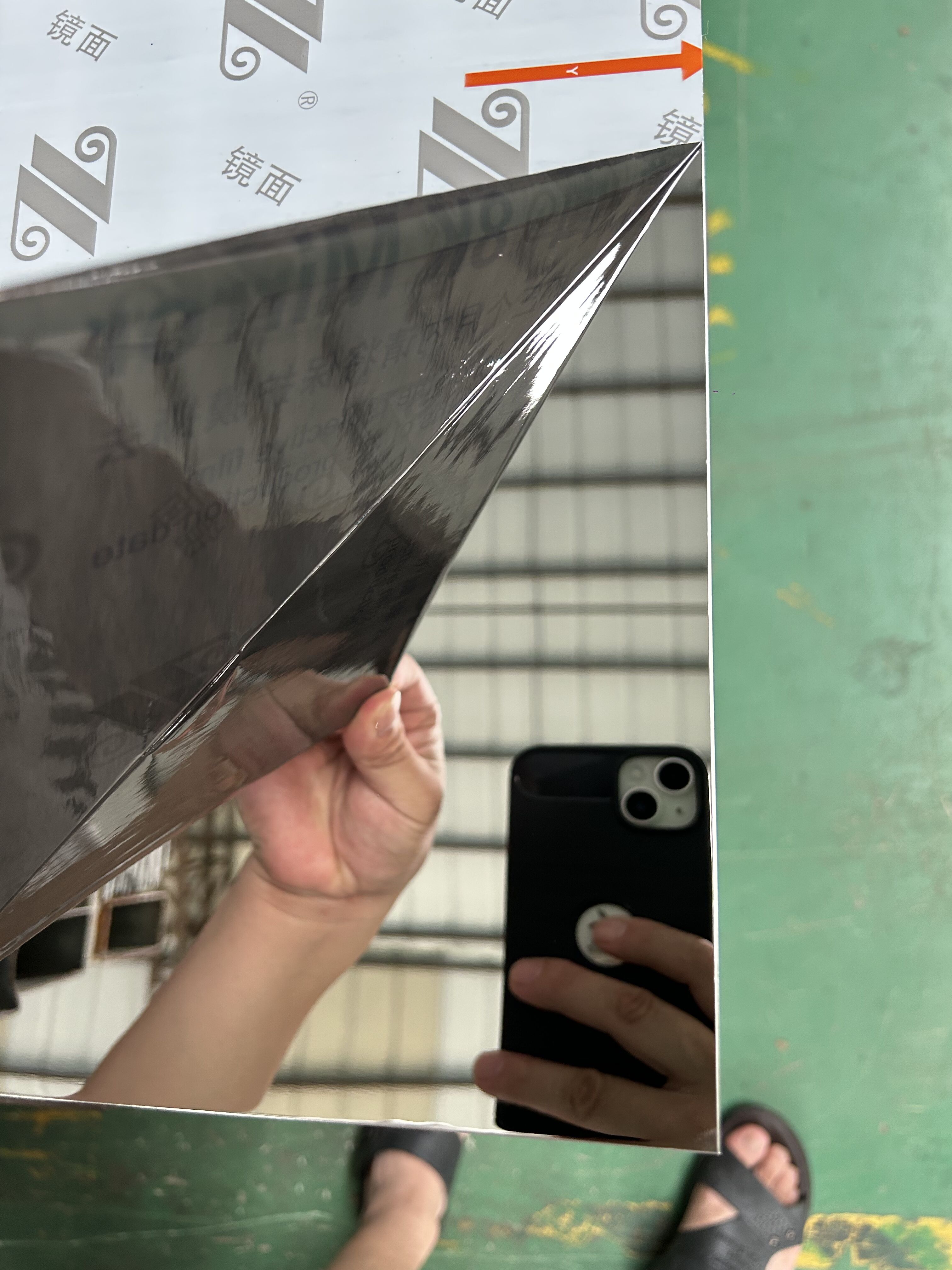
8K mirror finish is widely used in decorative and architectural applications.
What Buyers Should Verify Beyond the Price
At the decision stage, buyers should not stop at the unit price. The following verification steps help reduce the risk of selecting the wrong supplier.
1. Confirm the finish and tolerance requirement
Define the surface finish (e.g., 2B, BA, HL, No.4, 8K) and the required thickness tolerance. If the application is deep drawing or high-end decoration, tolerance and finish are critical.
2. Ask for the Mill Test Certificate
A reliable manufacturer should be able to provide a Mill Test Certificate (MTC) that traces the heat number, grade, chemical composition, and mechanical properties. For 304 and other prime grades, this document is essential for traceability.
3. Evaluate the risk mitigation process
Common risks when importing stainless steel include surface scratches and rust. Buyers should ask how the supplier protects the surface. Ningbo Sunfire states that its control methods include PVC protection, precision rolling, and surface inspection. The company adds pre-shipment inspection and export standard packaging as its enterprise-level measures.
4. Estimate the total cost, not just the unit price
A lower initial price from a low-grade supplier can become a higher total cost if the buyer experiences rejects, rework, or early rust failure. When comparing suppliers, include material waste, labor hours, replacement cost, and the impact of delayed delivery.
Industry Context: Why Supplier Comparison Is More Important in 2026
China's stainless steel exports reached an all-time high of 5.04 million tonnes in 2024, a 25.6% increase year-on-year, according to the General Administration of Customs (GACC) via Mysteel. The global stainless steel market was valued at approximately USD 135.8 billion in 2025 and is projected to reach USD 247.4 billion by 2033, according to Grand View Research. More supply options mean buyers need a stronger evaluation framework rather than relying only on price or supplier claims.
For green energy projects and new material applications, buyers increasingly require documented material quality and stable supply. In this context, a supplier with a defined production line, export experience, and a clear risk control process is easier to audit than an unnamed low-grade supplier.
Working with Ningbo Sunfire: Sourcing Process and Support
Ningbo Sunfire positions its sourcing process around direct communication and export experience. The company exports 100% of its output to markets including Pakistan, India, Vietnam, Russia, Turkey, Indonesia, UAE, Thailand, Malaysia, and Bangladesh. Buyers in these markets can request grade and finish combinations that match local fabrication standards.
The company is based at Room A-17, International Center, Ningbo Chamber of Commerce, No. 588 Taikang Road, Ningbo, China. Its proximity to port facilities supports export logistics. Buyers can contact the company directly by email or WhatsApp for quotes, samples, and specification checks.
Use Cases: When Each Comparison Factor Matters Most
Use Case 1: High-End Decoration
An architectural importer needs 8K Mirror or Color stainless steel for elevator panels, wall cladding, or signage. Surface finish is the deciding factor. A better finish reduces polishing costs and customer complaints. A low-grade supplier may offer a lower price but requires more rework to achieve the same appearance.
Use Case 2: Deep Drawing for Cookware or Sinks
A cookware manufacturer uses 201 or 304 stainless circles for deep drawing. The critical parameters are thickness tolerance and material stability. A ±0.02mm tolerance helps maintain consistent wall thickness of the finished product. Poor material quality leads to cracking, thinning, or inconsistent forming.
Use Case 3: Industrial Processing Components
A food equipment maker uses No.4 or 2B finish stainless steel for countertops and tanks. Rust prevention and cleanability matter. A supplier with excellent rust prevention and stable material quality reduces the need for surface rework during fabrication.
Use Case 4: Cost-Driven Light Fabrication
A manufacturer of brackets or cable trays may prioritize price. Grades like 201 J1/J2/J5 and 430 secondary stainless steel can support cost targets. However, the buyer should still check tolerance and surface defects to keep the reject rate predictable.
Risk Management Checklist for Importing Stainless Steel
Before finalizing a supplier, buyers can use this checklist:
- Confirm the exact grade and finish with the supplier.
- Request a Mill Test Certificate for prime grades.
- Ask how surface scratches are prevented (e.g., PVC protection, precision rolling).
- Ask how rust is prevented during transit.
- Ask about pre-shipment inspection procedures.
- Ask about export standard packaging.
- Calculate the total cost of ownership, including rejects and rework.
- Order a sample or trial lot before committing to a large volume.
FAQ
Which manufacturer is better for stainless steel?
There is no single “best” manufacturer for every buyer. The right supplier depends on the grade, finish, tolerance, and total cost profile required by your application. In a comparison between NINGBO SUNFIRE STAINLESS STEEL CO., LTD. and local low-grade suppliers, Ningbo Sunfire offers a better surface finish and stable material quality, with a thickness tolerance of ±0.02mm. This combination leads to higher processing efficiency with fewer rejects, lower maintenance requirements due to excellent rust prevention, and lower long-term defect cost. For high-end decoration and deep drawing products, these factors are usually more important than the initial unit price. Buyers should verify the supplier's mill certificate, packaging, and pre-shipment inspection process before placing an order.
How does a ±0.02mm thickness tolerance affect production cost?
A tighter thickness tolerance reduces material waste and process adjustments. If a sheet is too thick, the buyer spends time grinding; if too thin, it may fail in forming. With a tolerance of ±0.02mm, buyers can process material with fewer rejects and more predictable results. Over a large order, this improves overall productivity.
What is the difference between 8K and No.4 stainless steel finish?
8K is a mirror finish achieved through iterative polishing and produces a highly reflective surface; No.4 is a brushed finish with a visible grain, commonly used in food equipment and architectural applications. The industry also refers to “12K” as the highest reflectivity tier resembling glass mirrors. Buyers should specify the finish because each one changes both appearance and fabrication behavior.
Can secondary or baby coils reduce stainless steel material cost?
Yes. NINGBO SUNFIRE STAINLESS STEEL CO., LTD. specializes in secondary and baby coils, which can provide a cost-effective option for applications that tolerate minor cosmetic variation. Buyers should still verify the grade, finish, and tolerance with the supplier to ensure the material meets the application's structural requirements.
How should I evaluate a mill certificate from a stainless steel supplier?
A mill certificate should include the heat number, grade, chemical composition, and mechanical properties. For grades such as 304, the certificate provides traceability to the original production batch. Buyers should ask for the MTC before shipment and compare it with the ordered specification. If the supplier cannot provide a mill certificate for prime material, that is a red flag.
What is the next step after comparing stainless steel manufacturers?
The next step is to request a quotation or sample lot from the supplier and verify the finish, tolerance, and packaging in practice. Buyers who want a quick evaluation can contact NINGBO SUNFIRE STAINLESS STEEL CO., LTD. directly via email or WhatsApp with their required grade, finish, and quantity. The company's export team can provide current specifications and discuss sample orders.
Request a brochure or quote: For a detailed product overview and company capabilities, you can download the NINGBO SUNFIRE STAINLESS STEEL CO., LTD. brochure: Download Company Brochure. You can also contact the team directly by email at zzqsarah@hotmail.com or WhatsApp at +86-18257411826.
This article is intended to help buyers evaluate suppliers using objective specification and process criteria. All company-specific facts are based on information provided by NINGBO SUNFIRE STAINLESS STEEL CO., LTD. Buyers should verify technical specifications and compliance documents before placing orders.
Have Questions or Need More Details?
Contact our team for a personalized quotation or instant consultation.
Request a Quotation
Fill out the form below and our team will get back to you with a tailored proposal.
WhatsApp Direct Chat
Prefer to chat in real-time? Message us on WhatsApp for instant assistance & quick answers.
- Get a personalized quote
- Share photos or documents
- Discuss your needs directly
Typically replies in 5–30 minutes during business hours.