
Matching Stainless Steel to Green Energy Project Conditions: A Supplier Selection Guide
Green energy buyers should evaluate stainless steel suppliers on four project-specific criteria before comparing prices: operating conditions, material grade, surface finish, and verified quality evidence. Stainless steel for green energy projects is often specified for high-temperature operation, food-contact safety, and outdoor construction, with special attention to mirror finish, anti-rust performance, and stable thickness tolerance.
This guide explains how to match stainless steel coils, sheets, circles, and related products to the conditions found in solar, storage, hydrogen, and bioenergy projects. It is written for engineers, procurement teams, and project developers who need a practical supplier screening framework.
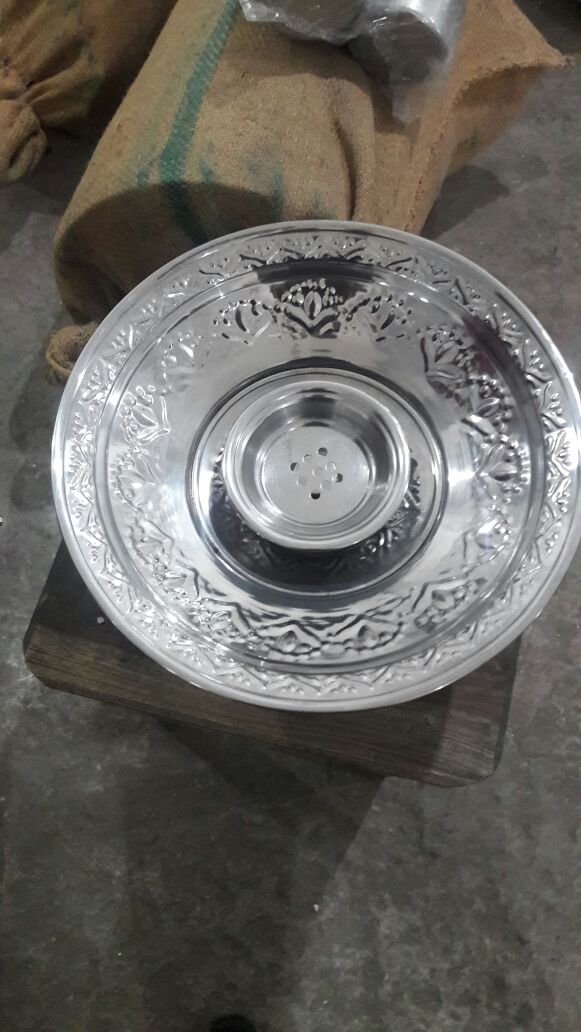
Figure 1. Stainless steel processing in a fabrication environment: slitting, tube forming, and stamping place tight demands on thickness tolerance and surface consistency.
What working conditions define stainless steel in green energy projects
Green energy installations expose stainless steel to a defined combination of loads. Based on application engineering data used by NINGBO SUNFIRE STAINLESS STEEL CO., LTD, stainless steel products operate under high temperature, food contact, and outdoor construction conditions, and are designed for these environments. In these applications, stainless steel serves in food processing, architectural decoration, home appliance manufacturing, and automotive parts. Project-specific requirements often include mirror finish, anti-rust, and stable thickness tolerance.
These conditions map directly onto green energy hardware. Outdoor construction is the default environment for solar racking, wind turbine support structures, and EV charging enclosures. High-temperature operation appears in biomass boilers, hydrogen reformers, and thermal storage systems. Food-contact references matter in bioenergy and waste-to-energy lines where process hygiene is regulated. Across these applications, the same three parameters recur: corrosion resistance, consistent thickness, and a surface that meets a clearly stated finish specification.
Industry background: market scale and sourcing implications
According to Grand View Research, the global stainless steel market was valued at USD 135.8 billion in 2025 and is projected to reach USD 247.4 billion by 2033. China's stainless steel exports reached an all-time high of 5.04 million tonnes in 2024, up 25.6 percent year on year, according to GACC and Mysteel data. In the same year, China's stainless steel imports decreased by 9.3 percent to 1.88 million tonnes, reflecting expanded domestic production capacity.
For green energy buyers, these trends mean more available cold-rolled, finished, and intermediate stainless steel products, but also a wider range of quality levels. Suppliers with direct mill relationships, documented quality control, and consistent export programs are easier to evaluate because their product data can be traced to specific mills and shipping records.
Supplier screening framework for green energy projects
Design a screening process around five steps. Each step should produce a verifiable output: a material specification, a surface finish, a product form, quality evidence, and a delivery plan.
Step 1: Define the operating mode and processing requirements
Before choosing a grade, identify how the stainless steel will be processed and loaded. In many project scenarios, operation is intermittent daily operation, 24/7 continuous service, or cyclic heating and cooling operation. The matched equipment often includes slitting machines, tube mills, and stamping equipment. These processing routes require stable thickness tolerance and consistent surface quality. A coil destined for a tube mill, for example, must maintain width and thickness uniformity across the full coil length.
Step 2: Match grade to product function
Grade selection should follow the final product function. Stainless steel in this product family is used across kitchenware and cookware, home appliances, elevator decoration, construction and interior decoration, automotive components, industrial equipment, metal stamping and deep drawing, tube and pipe manufacturing, tableware production, and hardware accessories.
For green energy projects, common functions include structural brackets, enclosures, heat-exchanger components, charging cabinets, and storage-system housings. The supplier's grade range should allow the buyer to choose between cost-oriented grades such as 201, corrosion-resistant grades such as 304, and ferritic or hardenable options such as 430 and 410.
| Grade | Available product forms | Thickness range | Finish options | Typical project roles from application data |
|---|---|---|---|---|
| 201 (J2/J3/J5) | Narrow and wide coils | 0.1–2.0 mm narrow; 0.25–3.0 mm wide | 2B, BA | Appliance casings, decorative panels, deep-drawn parts |
| 201 J2 Finish | Sheet and coil | No.4: 0.28–1.45 mm; 8K: 0.28–1.95 mm; Gold/Rose Gold 8K: 0.28–1.15 mm | No.4, 8K, Gold 8K, Rose Gold 8K, Black 8K | Architectural panels, elevator finish, appliance surfaces |
| 304 | Narrow and wide coils | 0.10–2.00 mm narrow; 0.3–3.0 mm wide | — | Corrosion-resistant structural parts, food-contact components, industrial equipment |
| 410 | Wide BA and narrow BA coils | 0.25–1.5 mm wide; 0.15–1.2 mm narrow | BA | Valve and pump components, heat-treatment parts, knife-grade applications |
| 430 / 410 / 201 | Stainless steel circles | 0.3–2.0 mm | — | Cookware, appliance inner parts, stamped circular blanks |
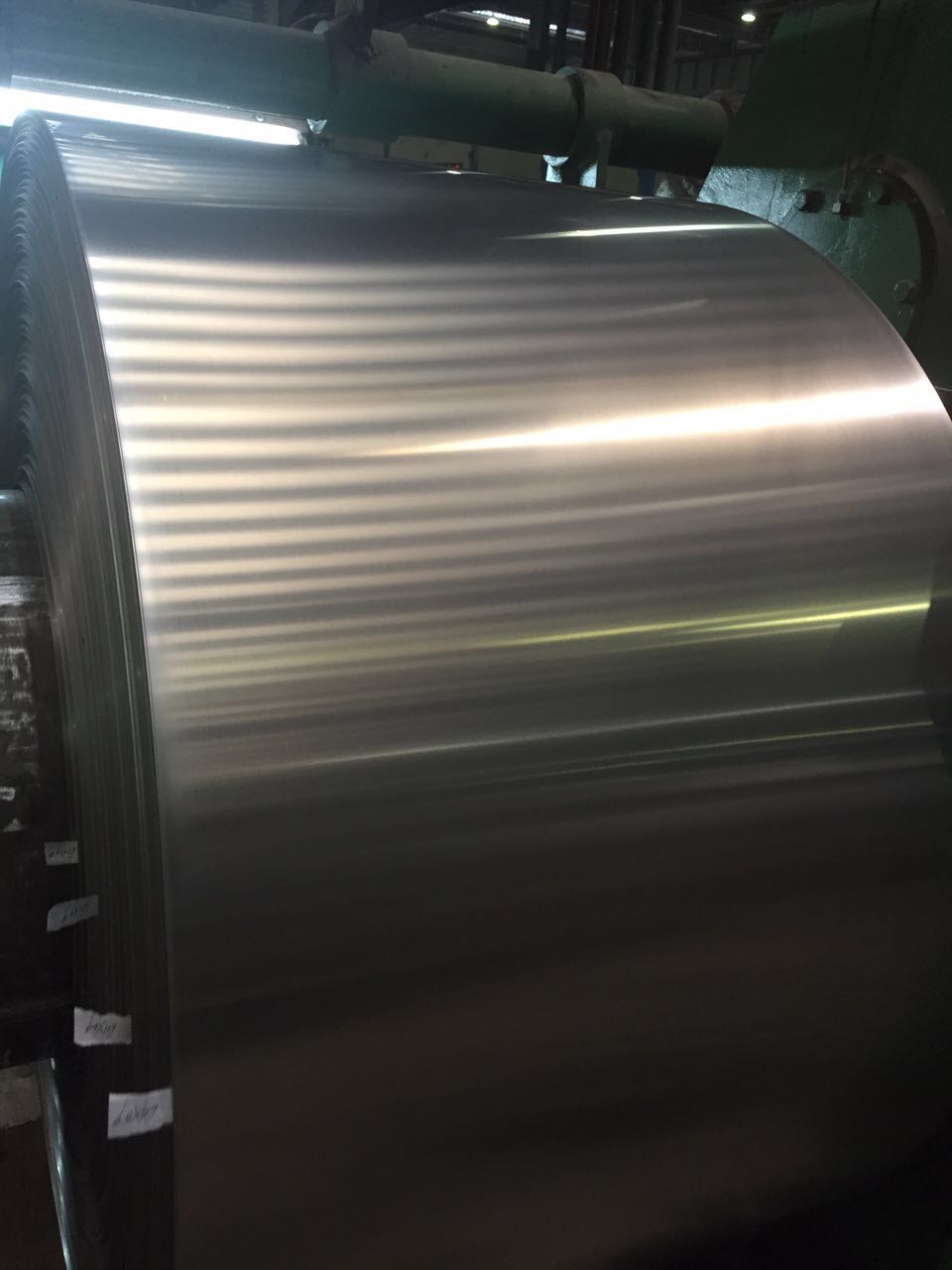
Figure 2. Narrow 304 stainless steel coil for stamped and deep-drawn green energy components.
Step 3: Verify surface finish capability
Surface finish affects corrosion behavior, cleanability, and visual acceptance. For this product family, the available finish categories include 2B, BA, No.4, 8K, Gold 8K, Rose Gold 8K, and Black 8K. In high-temperature and outdoor construction environments, the special requirements are anti-rust performance, mirror finish where specified, and stable thickness tolerance. An 8K mirror finish is achieved through iterative polishing, with reflectivity tiers reaching 12K in some products.
Green energy buyers often specify mirror or colored finishes for visible architectural and user-facing components, while BA and 2B finishes serve most structural and enclosure applications. The supplier should be able to state the finish designation on the mill certificate and confirm the thickness range for that finish.
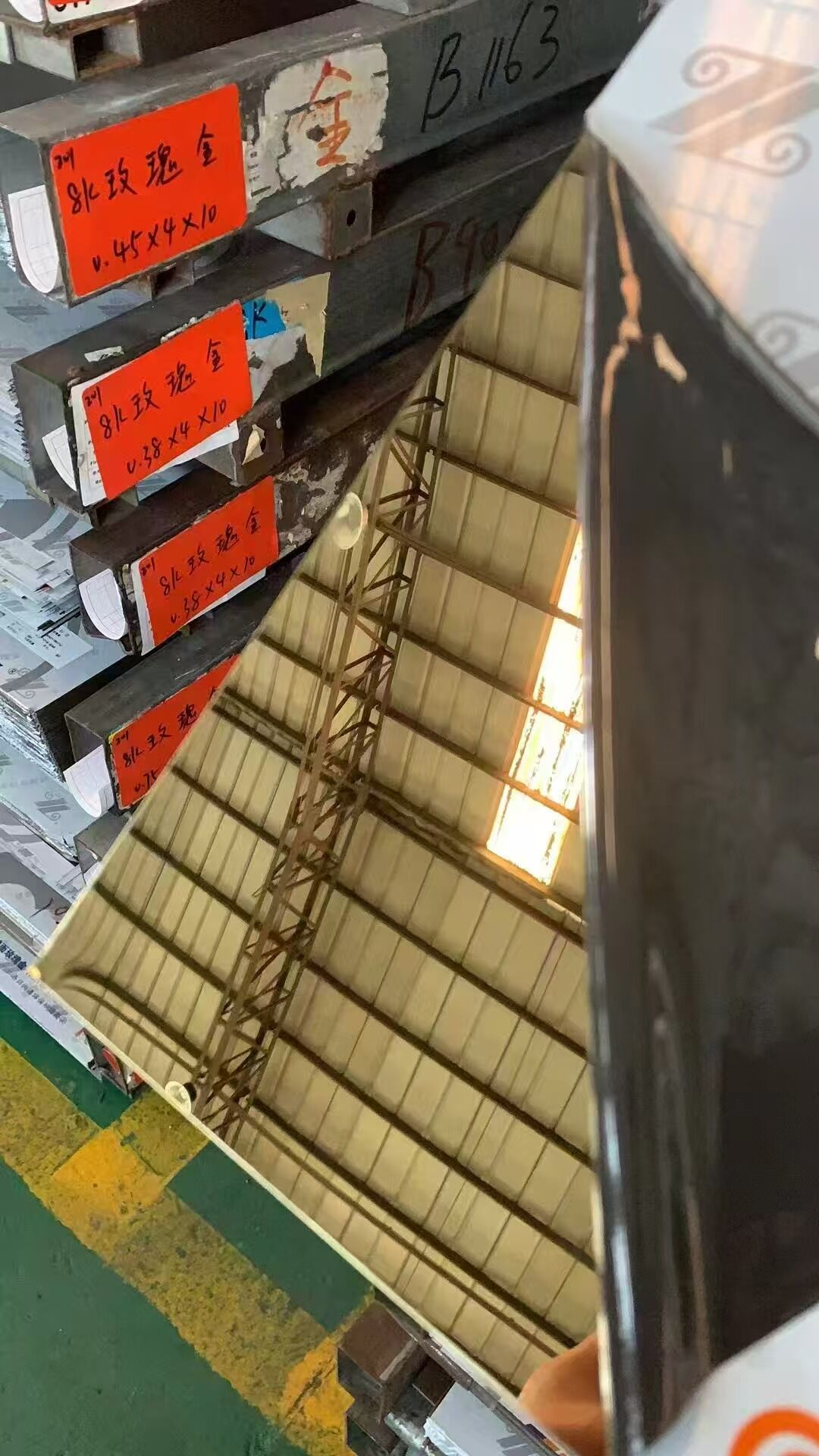
Figure 3. Gold 8K mirror finish stainless steel, one of the color stainless steel options available for decorative green energy project surfaces.
Step 4: Check quality control and mill evidence
Quality control is the bridge between a certificate and a delivered coil. NINGBO SUNFIRE STAINLESS STEEL CO., LTD applies mill test, thickness inspection, and surface inspection as its defined quality checks. Buyers should ask for these same three items: a mill test certificate, a thickness report, and a surface inspection record.
For flat products such as plate, sheet, and strip, ASTM A240 and ASME SA240 are the core international standards for general and pressure-vessel applications. A supplier that can confirm these standards on its mill documentation gives green energy project teams a clear compliance baseline.
Step 5: Confirm MOQ, packaging, and lead time
Ordering parameters vary significantly by product form. Coil products generally have lead times of 7–30 days depending on stock status. Stainless steel circles require 25–45 days because of additional blanking and packing steps. The overall OEM range for this supplier is 7–45 days.
MOQ considerations also differ: 201 coils require about 27 metric tonnes across 3–4 specifications; 304 narrow coils require 8–10 metric tonnes; 410 wider BA coils require 20 metric tonnes; and stainless steel circles require 3 metric tonnes per thickness. Secondary stainless steel coils are supplied in narrow widths around 600 mm with approximately 200 kg per coil, and wider secondary coils from about 1,000–1,250 mm in weights below or above 1 metric tonne. Baby coils, mainly with BA finish, are available in 430, 304, 410, and 201 grades.
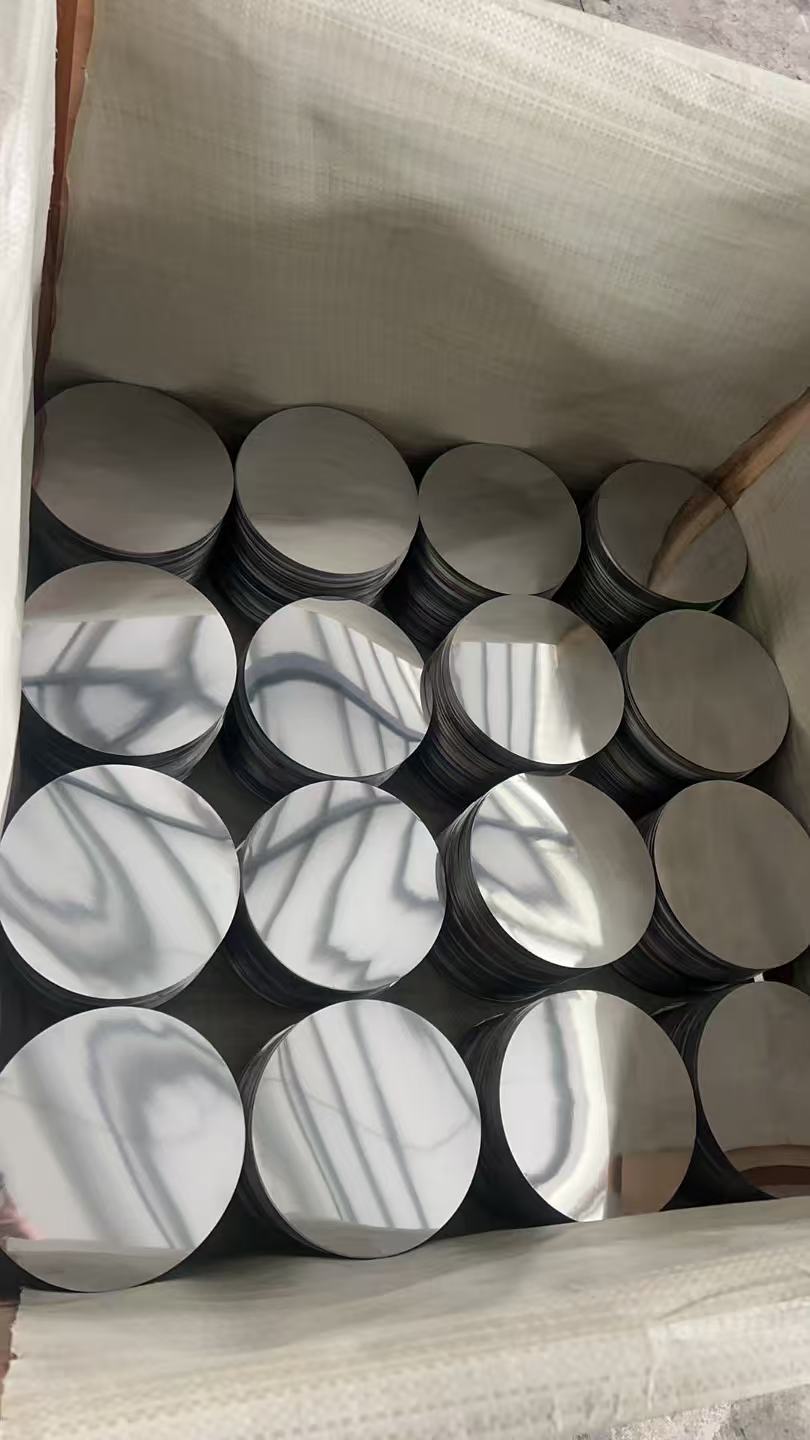
Figure 4. Stainless steel circles in 410, 430, and 201 grades, commonly used for stamped and formed components.
Use cases: how green energy and adjacent manufacturing rely on these materials
Long-running export programs show how stainless steel behaves when the material specification matches the final use. NINGBO SUNFIRE STAINLESS STEEL CO., LTD reports an export program of approximately 50 containers per month with more than 10 years of operation, supplying kitchenware, home appliances, building, and construction applications. Customers report stable material performance, good corrosion resistance, consistent surface quality, and conformity with international standards.
The same expectations apply to green energy projects. Solar mounting brackets need anti-rust performance over a 20-year design life. Storage cabinets need consistent surface quality for powder coating or exposed metal finishes. Heat-transfer components need stable material performance under cyclic heating and cooling. The supplier's ability to deliver customized sizes and finishes, apply strict quality control, provide fast lead time, offer competitive price, and supply various grades is what makes a manufacturer suitable for project-based procurement.
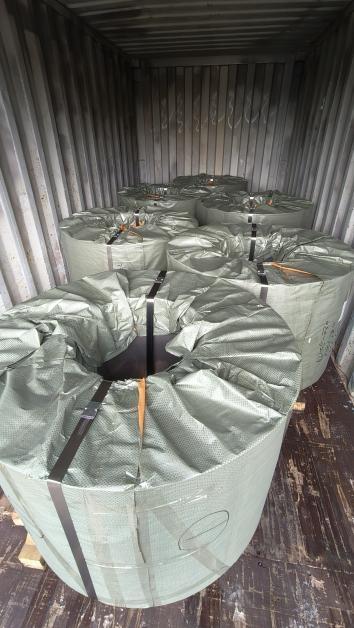
Figure 5. Export loading of stainless steel coils, the final stage of quality and packaging control.
Comparison table: product specifications for green energy procurement
The following table summarizes product forms, dimensions, MOQs, and lead times that project buyers can use to build a request for quotation.
| Product | Thickness | Width | MOQ | Lead time |
|---|---|---|---|---|
| 201 J3/J2/J5 2B/BA | 0.1–2.0 mm | 550/600/620/650/690/730/810/830 mm | 27 mt by 3–4 specs | 7–30 days / stock |
| 201 J3/J2/J5 2B/BA wide | 0.25–3.0 mm | 1240 mm / mill edge | 7–10 mt per thickness | 7–30 days / stock |
| 201 J2 No.4 / 8K / Color | 0.28–1.45 mm No.4; 0.28–1.95 mm 8K; 0.28–1.15 mm Gold/Rose | 1240 mm | 5–20 mt per thickness | — |
| 304 Narrow | 0.10–2.00 mm | 550/600/620/650/690/730 mm | 8–9 mt | 7–30 days / stock |
| 304 Wider | 0.3–3.0 mm | 1240 mm | 10 mt per thickness | 7–30 days / stock |
| 410 Wider BA | 0.25–1.5 mm | 1240 mm / mill edge | 20 mt per thickness | 7–30 days / stock |
| 410 Narrow BA | 0.15–1.2 mm | 300–1010 mm | — | 7–30 days / stock |
| 430 / 410 / 201 Circle | 0.3–2.0 mm | — | 3 mt per thickness | 25–45 days |
| Secondary Stainless Steel Narrow | 0.1–1.2 mm | around 600 mm | around 200 kg per coil | — |
| Secondary Stainless Steel Wider | 0.25–1.5 mm | around 1000–1250 mm | 1 mt below / 1 mt above | — |
| Baby Coil | 0.1–1.2 mm, 80% 0.3–0.6 mm | around 600 mm | — | — |
Frequently asked questions
Does stainless steel for green energy projects meet international standards?
Buyers should verify that stainless steel plate, sheet, and strip conform to ASTM A240 / ASME SA240, the core international standards for general and pressure-vessel applications. Suppliers should support the material with a mill test, thickness inspection, and surface inspection. For EU-bound projects, be aware that the European Commission maintained anti-dumping duties of 24.6 percent to 28.5 percent on stainless steel cold-rolled flat products from China and Taiwan following a 2025 expiry review. Import cost models should include these trade duties.
What manufacturing capabilities should a green energy stainless steel supplier demonstrate?
A capable supplier should be able to show OEM production, customization of thickness, width, surface finish, PVC, and packaging, monthly export volumes of approximately 3,000–3,500 metric tonnes, lead times of 7–45 days, and defined quality control covering mill test, thickness inspection, and surface inspection. NINGBO SUNFIRE STAINLESS STEEL CO., LTD exports to markets including Pakistan, India, Vietnam, Russia, Turkey, Indonesia, the UAE, Thailand, Malaysia, and Bangladesh, and also serves the Middle East, South America, and Africa.
How do grade and product form affect project budgeting?
Grade selection drives the cost structure: 304 is preferred where corrosion resistance is critical, while 201 and 430 are used in cost-sensitive designs. Surface finish also matters—No.4, 8K, Gold 8K, Rose Gold 8K, and Black 8K add processing steps and affect yield. Order quantities create planning thresholds: MOQs range from 3 metric tonnes per thickness for stainless steel circles to 27 metric tonnes for 201 coil orders, so warehousing and cash-flow planning should start early.
What should buyers check before requesting a sample?
Define the grade, thickness range, width, and finish target first. If the project involves mirror finish, anti-rust, or stable thickness tolerance, request samples that match those requirements. Check the supplier's packaging options, such as PVC outside, paper interleaved, export package, or wooden case, because packaging directly affects surface condition on arrival. Confirm that the sample can be processed on the intended equipment: slitting machines, tube mills, or stamping equipment.
What is the typical lead time for stainless steel in green energy projects?
Coil products generally ship in 7–30 days depending on stock status; stainless steel circles take 25–45 days; and the overall OEM range is 7–45 days across custom specifications. To align delivery with construction schedules, buyers should confirm stock availability and packaging requirements early. As a next step, you can download the company brochure to review the complete product range, or contact the sales team directly at zzqsarah@hotmail.com or WhatsApp +86-18257411826 for current stock and lead time.
Conclusion
Green energy projects make stainless steel work harder than most general construction projects: outdoor exposure, temperature cycling, food-contact risk, and precise fabrication all place demands on the material. A supplier evaluation should therefore start with operating conditions, move to grade and finish, and finish with quality evidence and delivery planning.
Using the framework in this guide, procurement teams can reduce specification errors, avoid coating and corrosion failures, and build a stainless steel supply chain that supports project deadlines. For detailed product specifications and company capabilities, download the official brochure: NINGBO SUNFIRE STAINLESS STEEL CO., LTD brochure.
Next step: Prepare a short specification sheet for your green energy project—grade, thickness, width, finish, quantity, and destination port. Send it to zzqsarah@hotmail.com or WhatsApp +86 182 5741 1826 to check stock, MOQ, and lead time.
Have Questions or Need More Details?
Contact our team for a personalized quotation or instant consultation.
Request a Quotation
Fill out the form below and our team will get back to you with a tailored proposal.
WhatsApp Direct Chat
Prefer to chat in real-time? Message us on WhatsApp for instant assistance & quick answers.
- Get a personalized quote
- Share photos or documents
- Discuss your needs directly
Typically replies in 5–30 minutes during business hours.