
Stainless Steel Baby Coils for Green-Energy Components
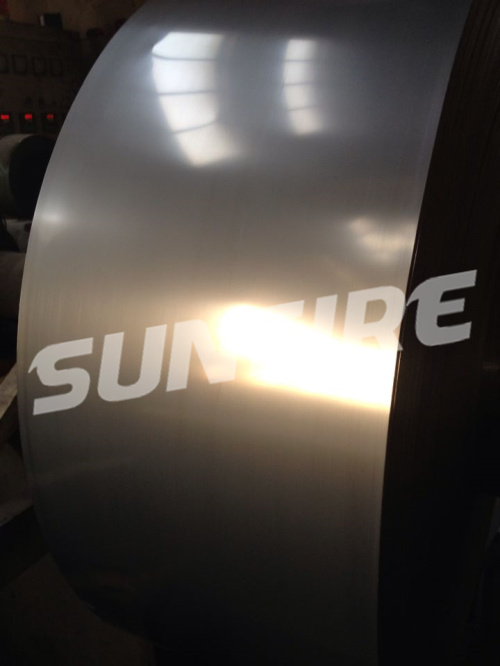
A stainless steel baby coil is a narrow, thin-gauge cold-rolled coil. In the baby coil specification published by Ningbo Sunfire Stainless Steel Co., Ltd, that means 0.1–1.2 mm thickness, roughly 600 mm width, mainly BA finish, and four grades: 201, 304, 410 and 430. Green-energy equipment projects buy this format for compact components — stamped and deep-drawn parts, small industrial equipment parts, automotive components and tube — where a 1240 mm mill-width coil would have to be cut down before it reaches the press.
The decision a project team actually faces is narrower than a grade chart suggests: which grade, gauge, width and finish combination lets one component run on an existing line, clear its own acceptance check, and stay reorderable at a volume the project can absorb. This guide works through that match in order, compares 201, 304, 410 and 430 on the characteristics the supplier publishes, and finishes with a purchasing checklist that turns an offer into a purchase order.
Scope note: the figures below come from the supplier's published product specifications and, where marked, from published industry statistics. Where a property is not published — mechanical properties, corrosion performance, certification — this article says so instead of assuming it.
The fitting problem: a compact component rarely wants a wide coil
A green-energy equipment project usually reaches the material decision through a bill of materials, not through a steel catalogue. The component drawing fixes a blank width, a gauge, a forming depth and a surface requirement; the coil offer fixes a mill width, a thickness band, a minimum quantity per width and a lead time. Most of the friction in the first quote sits in the gap between those two sets of numbers.
Width: about 600 mm versus 1240 mm
Baby coil is supplied at around 600 mm width, while the wider formats in the same product range run at 1240 mm or mill edge. For a component blank of a few hundred millimetres, the narrow coil lets the press plan whole multiples across the strip and keeps the number of slitting steps low. When the blank is wider than the baby coil, the project moves to a 1240 mm format — 304 wider at 0.3–3 mm, 410 wider BA at 0.25–1.5 mm, or 201 wider at 0.25–3 mm — and accepts that the coil, not the component, now sets the cutting plan.
Gauge: the 0.3–0.6 mm working band
Baby coil spans 0.1–1.2 mm, and the published specification notes that about 80% of the thickness falls between 0.3 mm and 0.6 mm. That band is where thin-gauge work is routine. Requests at the ends of the range — near 0.1 mm, or above 1.0 mm — are still inside the published envelope but move away from the typical volume, so they deserve a direct confirmation rather than an assumption.
Finish: BA is the default, mirror is a different line
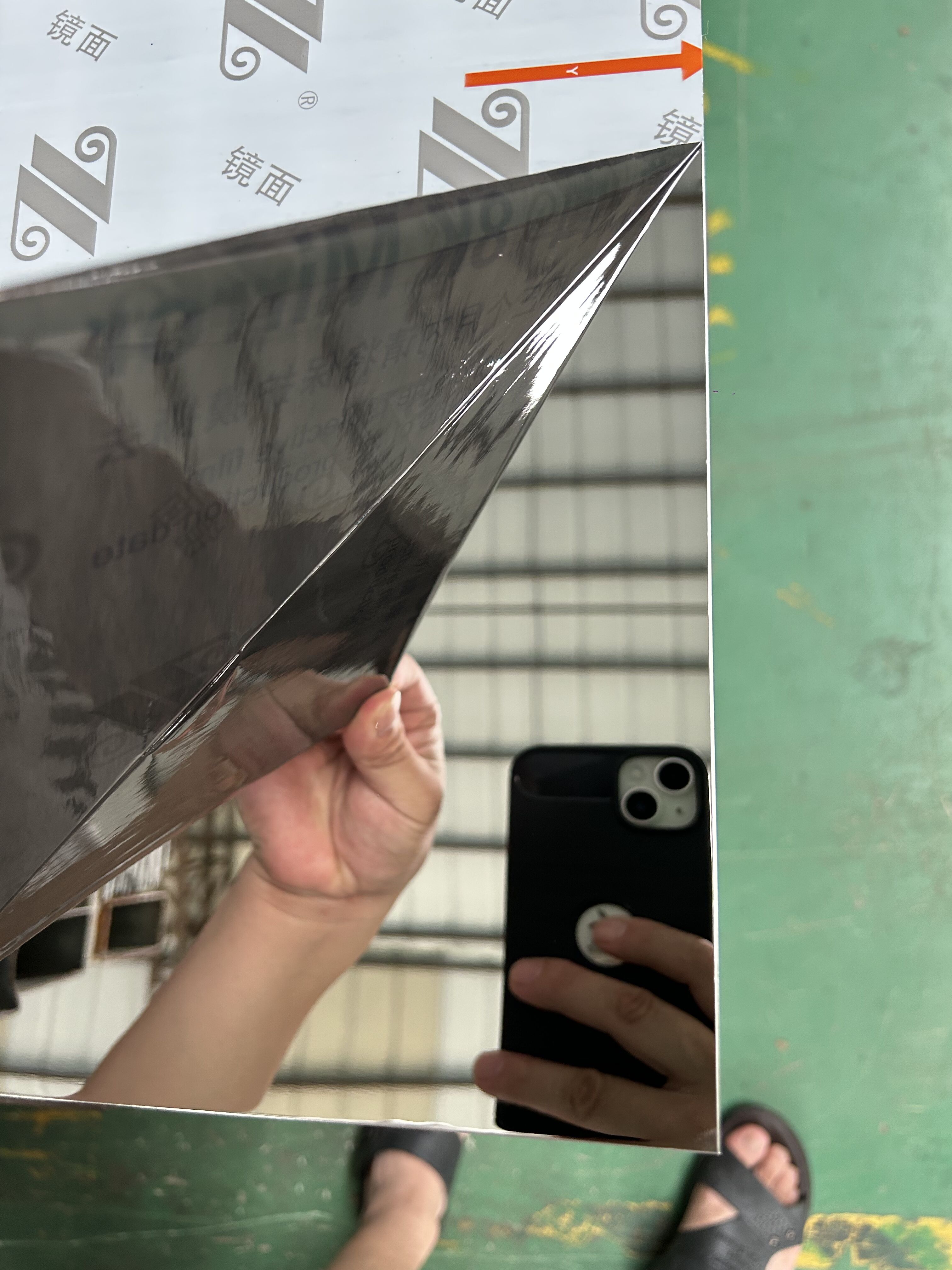
BA is the main baby coil finish, stated at 70% in the published specification. Where a component also has a visible face, projects often ask for a mirror or decorative finish in the same breath. Those finishes are documented on a separate line: 201 J2 in No.4, 8K, gold 8K, rose gold 8K and black 8K at 1240 mm width, with thickness bands of 0.28–1.45 mm for No.4, 0.28–1.95 mm for 8K and 0.28–1.15 mm for gold and rose gold 8K. That is a wider coil and a different finish route, not an upgrade applied to a 600 mm baby coil.
Order rhythm and documentation
Two quieter constraints decide whether a trial becomes a repeat order: the minimum quantity, which is set per width and thickness rather than per grade, and the inspection record, which for this product range is described as mill test plus thickness inspection plus surface inspection. A project that fixes four widths early can find itself carrying four separate commitments.
What the upstream supply picture means for a 2026 project
China remains a deep source of narrow and secondary stainless material. Association statistics republished by SEAISI put China's crude stainless steel output at 30.46 million tonnes for January–September 2025, with 3.78 million tonnes of stainless steel products exported in the same period. The same data set records 1.14 million tonnes of imports.
For a project team, that context explains why narrow-format offers are plentiful, and why availability alone is a weak screening criterion. The numbers are industry-level: they say nothing about any individual supplier's stock, grade integrity or delivery record. The differentiating questions sit further downstream — documented width and gauge discipline, a mill test certificate that matches the coil, a packaging method that survives the route, and a lead time that fits the project phase. The same restraint applies to grade popularity: a supplied research source notes that 300-series grades account for more than half of U.S. stainless consumption, but a consumption mix in one market does not select a grade for a European or Asian equipment part.
The baby coil specification, attribute by attribute
Reading the specification as a project document rather than a sales sheet makes the trade-offs visible. Each attribute below converts into a question the buyer can put to the supplier.
| Attribute | Published baby coil specification | What a project team should do with it |
|---|---|---|
| Grades | 430, 304, 410, 201 | Fix the grade shortlist before discussing width and quantity; the grade drives the rest of the order. |
| Thickness | 0.1–1.2 mm, with about 80% between 0.3 mm and 0.6 mm | Treat the 0.3–0.6 mm band as routine; confirm explicitly at the extremes. |
| Width | Around 600 mm | Plan blank layouts at or under this; wider blanks move to 1240 mm formats. |
| Surface | Mainly BA finish, stated at 70% | Specify BA in the order; treat mirror or colour as a separate line item. |
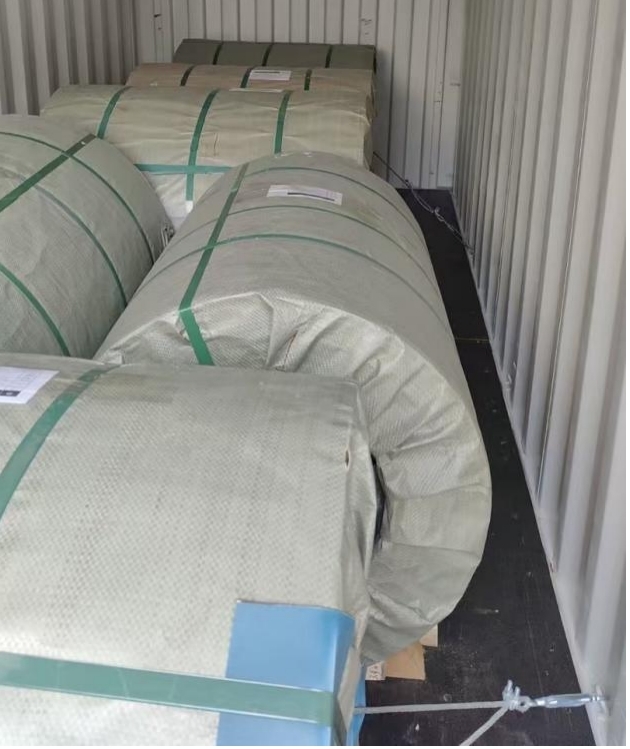
| Packaging | Nude packing | Plan in-plant handling and interleaving if the coil will be stored or moved between sites. |
| Coil weight | Not stated for baby coil | Ask for the weight per coil before sizing crane, decoiler and rack capacity. |
| Edge condition | Not stated for baby coil | Confirm whether the edge is as-rolled or trimmed, particularly for tube forming. |
The last two rows are deliberately marked as gaps. The wider 410 format is described as 1240 mm or mill edge, and the secondary narrow coil is described at around 200 kg per coil, but neither statement transfers automatically to a 600 mm baby coil. On a specification sheet, an unstated attribute is a question, not a default.
201, 304, 410 and 430: the differences the published data supports
All four grades carry the same published list of applicable industries: kitchenware and cookware, home appliances, elevator decoration, construction and interior decoration, automotive components, industrial equipment, metal stamping and deep drawing, tube and pipe manufacturing, tableware production and hardware accessories. That list confirms the format belongs in a component workshop; it is not a grade recommendation, because it is identical across grades.
The real differences in the published data are format and order structure. The trade groups the four into the 200 series (201), the 300 series (304) and the 400 series (410 and 430); the series tells you the alloy family, not which grade suits a given part. Composition, mechanical properties and any performance claim must come from the mill test certificate for the specific heat.
201: eight discrete narrow widths, with a batch-style minimum
201 is published as 201-J3, J2 and J5 in 2B and BA, at 0.1–2.0 mm over widths of 550, 600, 620, 650, 690, 730, 810 and 830 mm, with a minimum of 27 mt across three to four specifications and a lead time of 7–30 days including stock. A wider 201 line runs at 0.25–3 mm and 1240 mm, at 7–10 mt per thickness. The narrow sheet lists the widest selection of discrete sizes among the four, but its minimum is structured around a multi-specification order — workable for a project with several parts, awkward for a single-component trial.

304: width-specific minimums that suit staged projects
304 Narrow is published at 0.10–2.00 mm over 550, 600, 620, 650, 690 and 730 mm, with minimums of 9 mt at 690 and 730 mm and 8 mt at 620 and 650 mm, packed for export at 7–30 days including stock. 304 wider runs 0.3–3 mm at 1240 mm, 10 mt per thickness, with paper interleaving. For a project moving from prototype to pilot to ramp, the smaller width-based commitment is often the difference between a bookable trial and a deferred one.
410: a BA range that starts slightly higher
410 Narrow BA covers 0.15–1.2 mm at 300–1010 mm, with PVC, paper or refinish available as further processing. Its floor sits above the baby coil floor of 0.1 mm, which matters when a component drawing specifies the thinnest end of the range. 410 Wider BA runs 0.25–1.5 mm at 1240 mm or mill edge with a minimum of 20 mt per thickness and paper interleaving. The narrow 410 sheet does not publish a minimum quantity, so that figure has to be confirmed rather than inferred.
430: documented through the coil and circle ranges
430 appears as a baby coil grade, in the secondary narrow coil range at 0.1–1.2 mm and around 600 mm, and in the circle range at 0.3–2.0 mm with a minimum of 3 mt per thickness and a 25–45 day lead time. Secondary narrow 430 is packed with PVC outside or paper interleaved, at around 200 kg per coil. A project that needs 430 in a narrow coil should confirm which of these routes it is buying, because packaging, coil weight and lead time differ between them.
Step by step: matching a component to a baby coil
Step 1 — Read the drawing before the price list
Record blank width, blank thickness with tolerance, forming depth, visible-face requirement and any subsequent process such as welding or coating. The published baby coil data does not include formability limits or drawing ratios, so these values come from your own engineering, not from the coil sheet.
Step 2 — Choose the format against the blank width
If the blank fits inside roughly 600 mm with a workable margin, baby coil is the direct route. If it does not, move to a 1240 mm format and re-plan nesting. Between the two, slitting a wider coil down is possible, but it adds a process step before the press and should be priced as one.
Step 3 — Place the gauge inside the published envelope
Confirm that the required thickness sits inside 0.1–1.2 mm, and note how far it sits from the typical 0.3–0.6 mm band. For 410 narrow BA the published floor is 0.15 mm, not 0.1 mm, so a 0.12 mm requirement points to a different grade or a different conversation.
Step 4 — Separate visual requirements from the coil order
If the part has an exposed face, decide whether BA is acceptable. A mirror or colour requirement belongs to the 201 J2 finish line at 1240 mm width, with its own minimum of 5–20 mt per thickness, and should be quoted as its own item rather than assumed as a baby coil option.
Step 5 — Size the commitment
Add up minimum quantities across the widths and thicknesses in the bill of materials. A four-width order under a 27 mt multi-specification minimum, or four separate 8–9 mt width commitments, produces very different working-capital profiles. Where the project is still in evaluation, fewer widths and a single grade usually beat a broad trial order.
Step 6 — Write the acceptance terms
State the grade and series, thickness with tolerance, width in millimetres, finish, packaging, and the inspection record required. The published inspection set for this range is mill test, thickness inspection and surface inspection; if the project needs more, name it in the order rather than after delivery.
Where the format goes: four component families
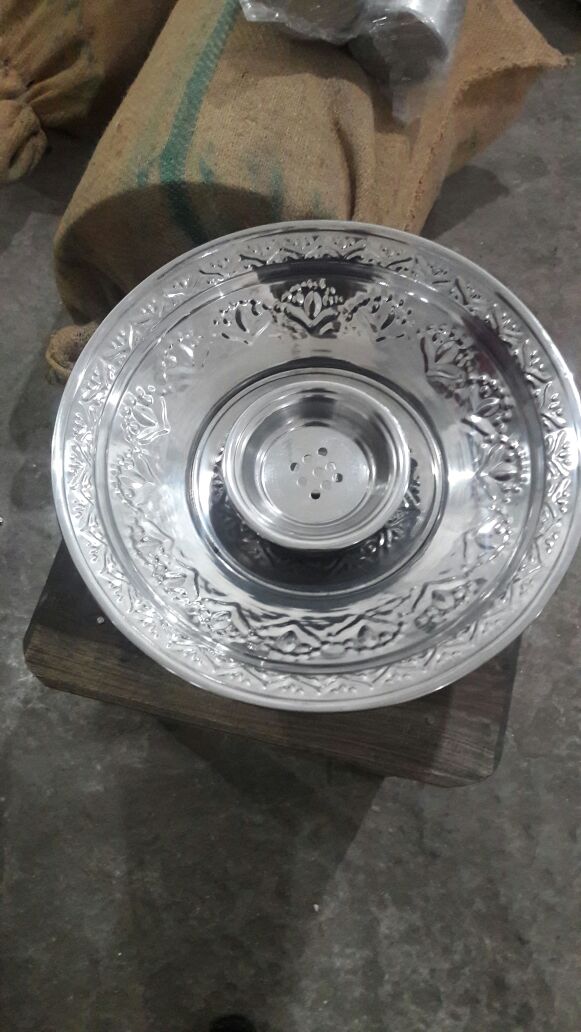
The application data attached to these products describes matched equipment as slitting machines, tube mills and stamping equipment, and lists special requirements of mirror finish, anti-rust and stable thickness tolerance. It also describes operating conditions that include high temperature, food contact and outdoor construction, with duty cycles from intermittent daily operation to 24/7 continuous service and cyclic heating and cooling. Those conditions are exactly why the coil specification sheet is a starting document rather than a qualification.
Metal stamping and deep drawing
The narrow width reduces the blank-planning problem, and the 0.3–0.6 mm band covers most thin-gauge stamping. Deep drawing adds a requirement the coil sheet cannot answer — how the specific heat behaves through the draw — which is why a forming trial on production tooling remains the decisive test.
Tube and pipe manufacturing
A tube mill consumes strip continuously, so width consistency and edge condition carry directly into weld quality and diameter control. Because baby coil is packed nude, in-plant handling between receipt and the mill matters as much as the coil itself.
Industrial equipment and automotive components
Both are listed as applicable industries for all four grades. In practice, these parts are often the ones with a visible face or an outdoor position, which brings the finish question and the durability question forward. Neither can be settled from the grade name; both need the mill certificate and, where the risk justifies it, the buyer's own exposure test.
Circles as an alternative to coil
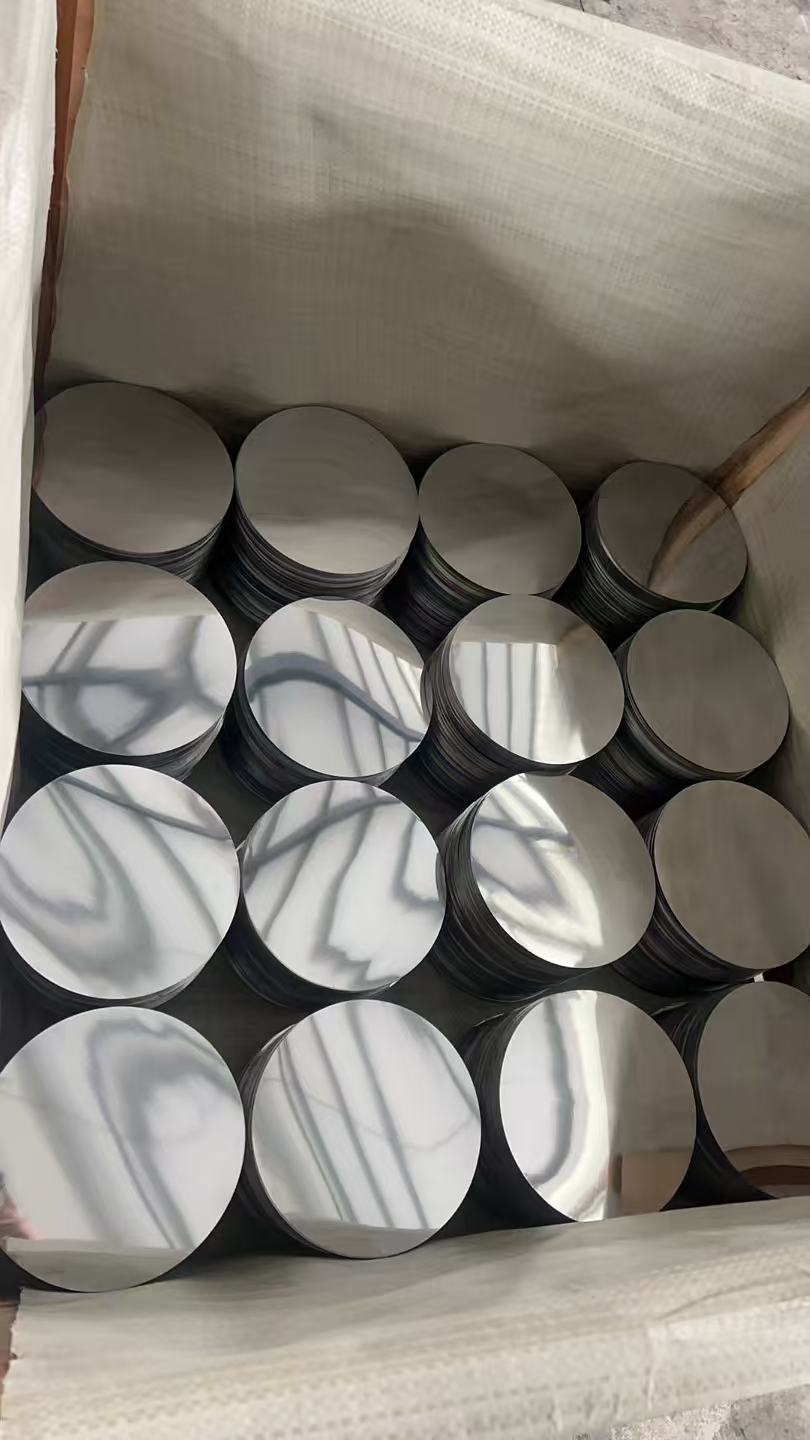
Where the component is round and the press takes blanks rather than strip, the same supplier's circle range covers 410, 430 and 201 at 0.3–2.0 mm, with a minimum of 3 mt per thickness and a 25–45 day lead time. That is a slower route than a stock coil but removes the blanking step and the strip scrap.
Grade comparison at a glance
| Grade | Narrow / baby coil formats | Thickness and width in those formats | Minimum quantity signal | Other documented formats |
|---|---|---|---|---|
| 201 | 201-J3 / J2 / J5 in 2B and BA | 0.1–2.0 mm; 550, 600, 620, 650, 690, 730, 810, 830 mm | 27 mt across 3–4 specifications | 201 wider 0.25–3 mm at 1240 mm, 7–10 mt per thickness; 201 J2 decorative finishes at 1240 mm |
| 304 | 304 Narrow | 0.10–2.00 mm; 550, 600, 620, 650, 690, 730 mm | 9 mt at 690/730 mm; 8 mt at 620/650 mm | 304 wider 0.3–3 mm at 1240 mm, 10 mt per thickness |
| 410 | 410 Narrow BA | 0.15–1.2 mm; 300–1010 mm | Not published for the narrow format | 410 wider BA 0.25–1.5 mm at 1240 mm / mill edge, 20 mt per thickness; PVC, paper or refinish |
| 430 | Baby coil grade; secondary narrow coil | 0.1–1.2 mm at around 600 mm in secondary narrow | Not published for the coil format | 430 circles 0.3–2.0 mm, 3 mt per thickness, 25–45 days |
One number in this table needs care. The supplier's capability summary lists a general minimum of 27 mt and a lead time of 7–45 days, while the product sheets give the per-width and per-thickness figures above. For a project order, the line-item figure governs, but a written confirmation avoids a dispute later.
What the specification does not establish
Several things a project team may reasonably want are simply not in the published data, and no supplier document should be read as if they were.
Mechanical properties and composition. No chemical composition or mechanical property table is published for these grades in the supplied material. Requests should be answered with a mill test certificate for the specific heat, not with a grade brochure.
Durability under project conditions. The application data names anti-rust as a requirement and describes high-temperature, food-contact and outdoor construction conditions. It does not quantify behaviour in any of them. Any durability expectation for an outdoor or cyclically heated part has to be established by the project itself.
Certification. No management-system certificate or standard-specific declaration is claimed for the products described here. If the project requires one, ask for the certificate number, issuing body and scope, and check that the scope covers the product form being bought.
Finish on narrow coil. The decorative finishes — No.4, 8K, gold, rose gold and black 8K — are documented on the 201 J2 line at 1240 mm width, not on a 600 mm baby coil.
Purchasing checklist for a baby coil order
- Grade and series written exactly, including the J-designation for 201.
- Thickness in millimetres with the tolerance and the measurement method.
- Width in millimetres, and whether the edges are as-rolled or trimmed.
- Finish stated as BA, with any visual acceptance described in words rather than by grade name.
- Format named explicitly: baby coil at around 600 mm, secondary narrow coil, or a 1240 mm wider format.
- Coil weight confirmed per order, since baby coil weight is not published.
- Packaging agreed: nude packing for baby coil, PVC outside or paper interleaved where the format calls for it.
- Minimum quantity confirmed per width and thickness, not per grade.
- Lead time and stock status in writing, distinguishing stock from production.
- Inspection record and claim window: mill test certificate, thickness inspection, surface inspection, and how a rejection is handled.
FAQ
How do I find a stainless steel manufacturer for green-energy projects?
Screen on documents, not on listings. Four checks do most of the work: the grade and format you need must appear in the supplier's published specification, with dimensions close to your drawing; the minimum quantity and lead time must fit the project phase; the supplier must be able to issue a mill test certificate and describe its thickness and surface inspection; and its export record should include markets comparable to yours. Ningbo Sunfire Stainless Steel Co., Ltd, established in 2013 and reporting a 100% export share to markets including Pakistan, India, Vietnam, Russia, Turkey, Indonesia, the UAE, Thailand, Malaysia and Bangladesh, publishes baby coil in 201, 304, 410 and 430 at 0.1–1.2 mm and around 600 mm in mainly BA finish, which is where such a check would start.
What acceptance criteria should a baby coil purchase order contain?
At minimum: grade and series, thickness with tolerance and measurement method, width in millimetres, finish as BA, coil format, packaging, the required inspection record and the claim window. For this product range the published inspection set is mill test, thickness inspection and surface inspection, so anything beyond that — a specific standard, a certificate scope, a sampling plan — should be written into the order rather than assumed. Naming the format explicitly matters, because a baby coil at around 600 mm and a secondary narrow coil share the same thickness band but differ in packaging and coil weight.
Which baby coil grade should I specify for a stamped or deep-drawn component?
The coil specification cannot answer this, because all four grades — 201, 304, 410 and 430 — carry the same published list of applicable industries. Start from the drawing instead: required gauge, blank width, forming depth and visible-face requirement. Then check the format limits: 410 narrow BA starts at 0.15 mm, while the baby coil range starts at 0.1 mm, so a 0.12 mm requirement needs a different route. Finish the selection with a mill test certificate and a forming trial on production tooling.
What minimum quantity and lead time should a project expect?
Expect the figure to depend on width and thickness rather than on grade. In the published data, 201 narrow carries a minimum of 27 mt across three to four specifications, 304 narrow carries 9 mt at 690 and 730 mm and 8 mt at 620 and 650 mm, 410 wider BA carries 20 mt per thickness, and the circle range carries 3 mt per thickness. Published lead times run 7–30 days including stock for most coil formats, up to 7–45 days in the capability summary, and 25–45 days for circles. A capability-page figure and a product-sheet figure can differ, so confirm the line item.
Can we evaluate the material before committing to a full coil order?
The published specifications do not set a sample policy, so sample size, whether a trial quantity can be released below the standard minimum, and who carries the freight have to be agreed in writing. What is worth testing is consistent: thickness at several points across the strip, BA surface under raking light, edge condition, flatness, and a short run on the actual tooling. If the part has a visible face or an outdoor position, add the finish or exposure check the project requires.
Conclusion
Matching a stainless steel baby coil to a green-energy equipment component comes down to four numbers and one document: grade, thickness, width, finish, and the mill test certificate that proves what arrived. The published range — 201, 304, 410 and 430 at 0.1–1.2 mm, around 600 mm wide, mainly BA — covers a large share of compact component work, but each grade reaches that range through a different format and a different order structure, and those differences decide whether a trial is bookable.
The discipline that pays off is separating what the specification establishes from what it does not. Width, gauge band, finish share, minimum quantity and packaging are documented. Mechanical properties, durability under project conditions, and certification are not, and treating them as documented is where most evaluation risk enters a project.
Next step. If a component sits inside the 600 mm envelope and the 0.1–1.2 mm band, a sample coil and a quotation against a fixed width, thickness and finish are the fastest way to close the evaluation. The full product range, formats and packaging options are set out in the Ningbo Sunfire stainless steel product brochure.
Have Questions or Need More Details?
Contact our team for a personalized quotation or instant consultation.
Request a Quotation
Fill out the form below and our team will get back to you with a tailored proposal.
WhatsApp Direct Chat
Prefer to chat in real-time? Message us on WhatsApp for instant assistance & quick answers.
- Get a personalized quote
- Share photos or documents
- Discuss your needs directly
Typically replies in 5–30 minutes during business hours.