
Sourcing Thin-Gauge Coils: A Problem-Solution Approach Using 304 Narrow and Wider Formats
Direct answer: Most thin-gauge 304 coil sourcing problems are specification problems, not grade problems. They are created by three decisions made before the purchase order exists: the coil width you commit to, the gauge tolerance you accept, and whether the material is fresh prime coil or a secondary lot. 304 Narrow at 550–730 mm width and 0.1–2.0 mm thickness fits blank and strip work that sits inside that window. 304 Wider at 1240 mm fits parts that exceed 730 mm, or buyers who prefer to slit in-house. Where surface finish integrity cannot be reworked, specify fresh narrow coils rather than absorbing the lot-to-lot variance that comes with secondary supply.
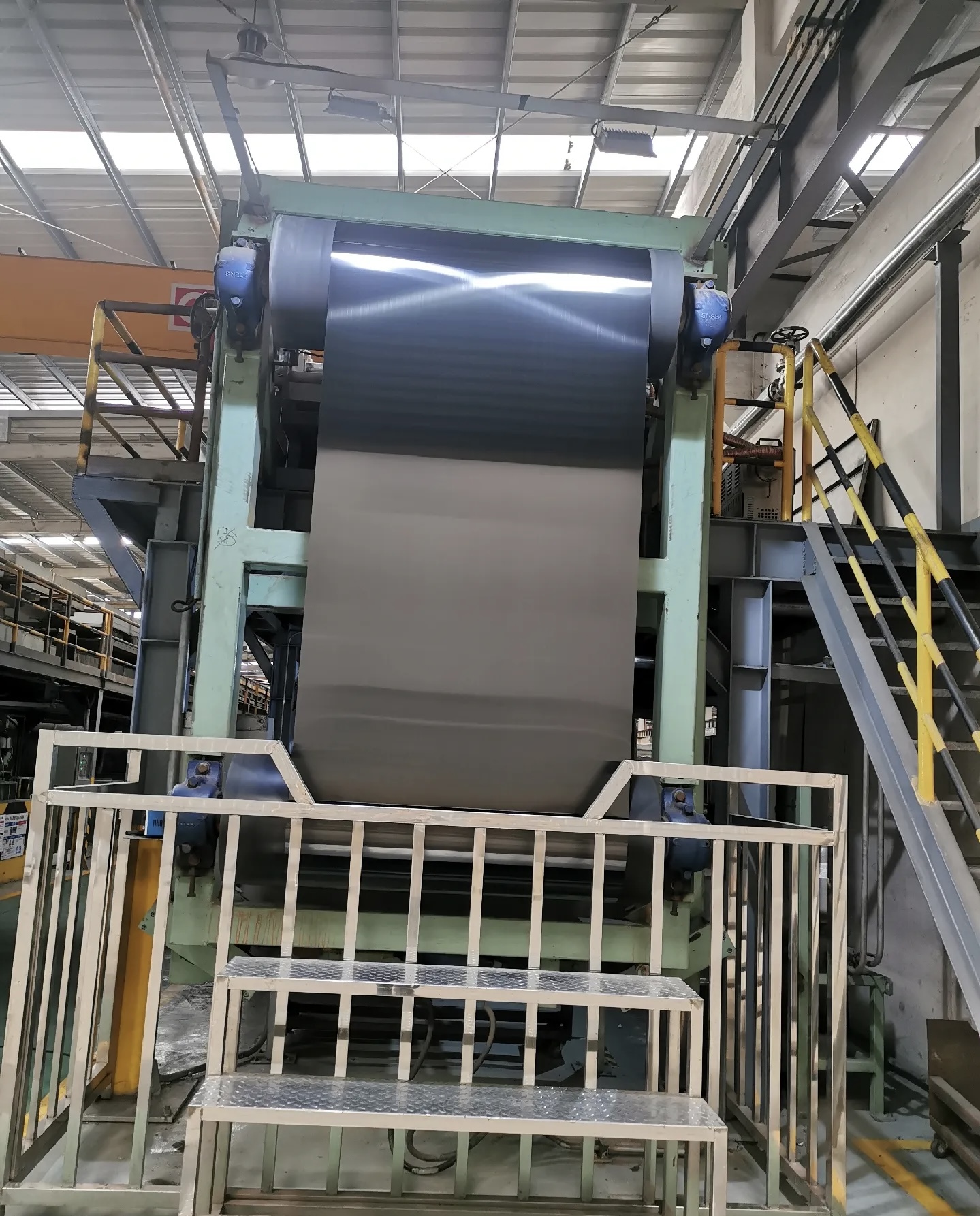
Cold rolled stainless steel coil production at a partner mill. Format choice — narrow versus wider — is decided at coil level, before slitting and stamping.
Why Thin-Gauge Coil Sourcing Breaks Down
Thin gauge punishes every loose specification. At 0.1–2.0 mm, the same width error, crown condition or surface mark that would be invisible on 3 mm plate turns into edge wave, die marks, or a rejected decorative panel. Buyers who source 304 as a generic “stainless steel coil” therefore tend to discover the real requirement only after the first production run. The four failure patterns below cover most of those cases.
Problem 1 — Width mismatch and edge trim waste
A 1240 mm master coil does not become a 620 mm blank without a slitting step, and that step produces edge trim, slit burr and additional handling. When the required blank width is consistently below roughly 730 mm, buying a wider coil means paying for metal that becomes scrap or a secondary by-product. The reverse error is equally costly: ordering 550–730 mm narrow coil for a part that needs 900 mm forces welded joints, redesign, or a second purchase. Width is the first cost driver in thin-gauge sourcing, and it must be derived from the actual blank layout rather than from habit.
Problem 2 — Gauge tolerance at 0.1–2.0 mm
At thin gauge, thickness tolerance controls both formability and scrap rate. A coil that runs at the upper edge of the accepted tolerance on one side and the lower edge on the other creates inconsistent drawing depth, uneven polishing pressure, and rejects that appear randomly. This is the practical difference between controlled and uncontrolled supply: comparison data on precision cold rolled material cites a thickness tolerance of ±0.02 mm, described as more precise than local low-grade supply. Buyers who never write a tolerance into the RFQ cannot claim that difference in a dispute.
Problem 3 — Secondary supply variance
Secondary stainless steel coil is a legitimate sourcing category: it lowers entry cost and absorbs demand that does not need prime surface. The trade-off is variance. Secondary lots are assembled from material that has been downgraded for surface, dimension or edge condition, so the buyer inherits a mixed inspection load — more frequent surface checks, more selective nesting, and more rework decisions at the press. For non-visible internal parts this is manageable. For a visible decorative face, it is a hidden cost that appears in the reject bin rather than on the invoice.
Problem 4 — Surface finish integrity on thin material
The two dominant coil risks are surface scratches and rust. At thin gauge both are amplified: less material thickness means less margin for a polish step, and a scratch on a 0.4 mm 8K mirror or Gold Mirror sheet cannot be polished out without changing the reflected image. Buyers specifying No.4, HL, BA, 8K mirror, Gold Mirror or color stainless steel surfaces at thin gauge are therefore buying handling discipline as much as they are buying metal.
Industry Background: Why Format Choice Matters Now
China remains the reference supply base for stainless flat products, and the volume context explains why format-level discipline has become a normal buyer expectation rather than an advanced one. According to association data attributed to the Stainless Steel Council of China Iron and Steel Association and reported by SEAISI, China exported approximately 3.78 million tonnes of stainless steel products in January–September 2025, alongside crude stainless steel output of about 30.46 million tonnes in the same period.
Demand structure supports the same conclusion from the other side. A U.S. market source published by the Recycled Materials Association states that 300-series grades account for more than half of U.S. stainless steel consumption, which is consistent with 304 being the default specification for thin-gauge stamping and decorative work. Commercial research also values the global stainless steel market at USD 134 billion in 2025, and reports the global mirror polished stainless steel sheet market growing at a CAGR of 5.3% through 2032. Those figures describe commercial research estimates rather than audited statistics, but the direction is relevant: decorative and precision surface demand keeps growing, and it is precisely that demand that is least tolerant of coil-format mistakes.
Scale alone does not make sourcing easier. A large export market means many suppliers offering “304 coil” at different widths, tolerances and lot histories, which pushes the decision back onto the buyer: define the format, define the tolerance, define the surface requirement, then choose the supply route that matches. That is the framework this article applies.
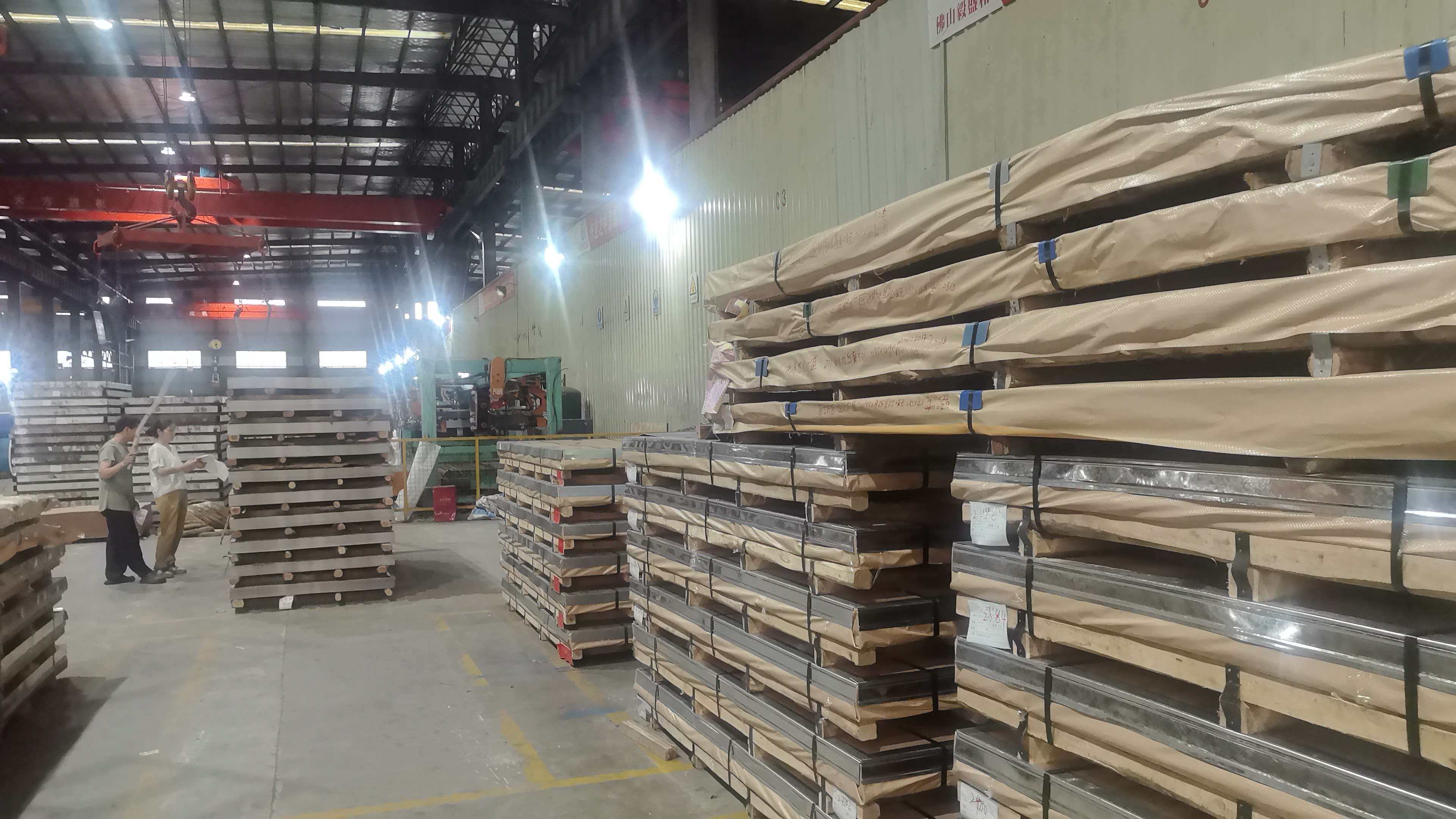
Precision rolling is the process step that decides whether a 0.1–2.0 mm gauge claim survives inspection across the full coil width.
The Solution: 304 Narrow and 304 Wider Are Two Tools, Not Two Grades
Both formats are 304. The difference is how much width the buyer takes ownership of, and where the slitting and handling risk sits. Treated as two tools in a toolbox, the sourcing problem becomes a routing decision instead of a price negotiation.
304 Narrow — 550–730 mm width, 0.1–2.0 mm thickness
Narrow 304 is specified for multi-purpose stamping and strip-fed processes where the finished blank or strip already sits inside the 550–730 mm window. Because the width arrives close to net shape, the buyer gives up less to edge trim and takes on less slitting handling. Thin gauge combined with a controlled tolerance in the ±0.02 mm class supports consistent die performance, and the format is described as best suited to high-end decoration and deep drawing products — the two applications where gauge stability and surface integrity are hardest to recover once lost.
304 Wider — 1240 mm width
Wider 304 is the correct choice when the part width exceeds 730 mm, when a single master coil must feed several different blank widths, or when the buyer already runs in-house slitting and can control edge quality and trim utilisation internally. In those cases a 1240 mm coil converts one purchase decision into a flexible cutting programme. The cost of that flexibility is that slit quality, burr control and surface protection move inside the buyer’s own process — a capability that must genuinely exist before the wider format pays for itself.
When fresh narrow coils should replace secondary supply
The rule is narrow and practical: if a surface defect cannot be reworked, do not buy variance. Where the output is a visible No.4, HL, BA, 8K mirror, Gold Mirror or color stainless steel face, and where polishing or re-finishing would change the appearance or add a process step, the correct specification is fresh narrower coil rather than a secondary lot chosen on price. Secondary supply remains valid for non-visible structural parts, internal components and trial runs where inspection capacity exists to sort the variance. The decision is not about quality tiers; it is about whether the downstream process can absorb variance at an acceptable cost.
Decision shortcut: blank width inside 550–730 mm → 304 Narrow. Blank width above 730 mm or multi-width slitting in-house → 304 Wider at 1240 mm. Visible finish that cannot be reworked → fresh narrow coil, not secondary.Step-by-Step: Specifying a Thin-Gauge 304 Order
A repeatable thin-gauge order is built in seven steps, and each step closes one of the failure patterns above. The sequence matters, because a tolerance agreed after the coil is rolled is a claim, not a specification.
- Map the blank, not the product. Draw the actual blank or strip layout, including edge trim allowance and any nesting. The widest single blank and the total width demand across the cutting programme determine whether the answer is narrow or wider.
- Lock grade and finish together. Confirm 304 as the grade and state the finish explicitly — 2B, BA, No.4, HL, 8K mirror, Gold Mirror or color stainless steel. Finish and gauge interact: a thin 8K surface has a smaller rework window than a thin 2B surface.
- Write the thickness tolerance into the RFQ. Specify the nominal gauge inside 0.1–2.0 mm and state the accepted tolerance band. Reference precision cold rolled supply in the ±0.02 mm class where forming consistency matters, and require the tolerance to hold across the full coil width, not only at mid-width.
- Choose the format. Select 304 Narrow at 550–730 mm or 304 Wider at 1240 mm using the decision shortcut above. Record the reason, so that a later price comparison does not silently reopen a settled specification.
- Specify surface protection and inspection. For thin gauge, require PVC protection, precision rolling control and surface inspection as the standard handling package, with pre-shipment inspection and export standard packaging before dispatch. Scratches and rust are the two risks this step is designed to remove.
- Validate with a sample before volume. Run the actual die, polishing line or tube mill on the sample coil. Check gauge across the width, edge condition, finish uniformity and PVC removal behaviour. A sample that only looks correct is not validation.
- Fix the documentation and release the order. Align the mill test certificate, grade marking and packaging standard with the agreed specification, then release volume against the validated sample rather than against the quotation.
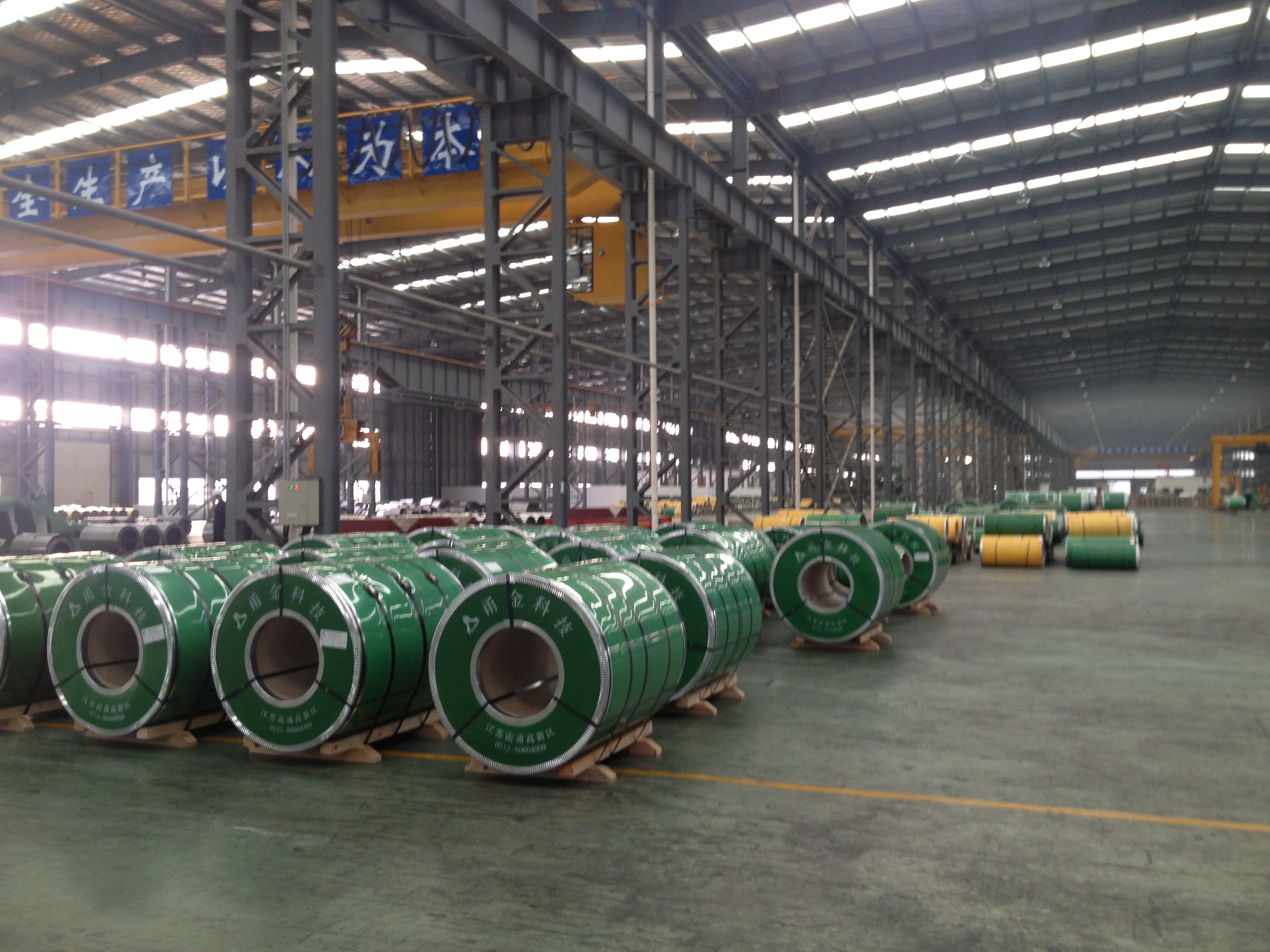
Mill-level process control is where gauge tolerance, finish consistency and lot traceability are actually established.
Use Cases: Where Each Format Earns Its Place
Format decisions become obvious once they are attached to a process. The five cases below cover the majority of thin-gauge 304 demand patterns.
Multi-purpose stamping. Progressive and transfer dies running blanks inside 550–730 mm benefit from 304 Narrow because the coil arrives close to net shape and the gauge stays consistent through the stroke. Fewer rejects per thousand strokes is the measurable outcome, and it is the same outcome described in supplier comparison data as higher processing efficiency with fewer rejects.
Deep drawing and high-end decoration. Cookware, sink bowls and visible decorative parts combine thin gauge with forming depth. This is the combination that comparison data identifies as the natural application for precision cold rolled supply with tight thickness tolerance: consistent gauge supports even draw, and consistent surface protects the finished face.
Tube and strip-fed forming. Tube mills and roll-formed profiles consume narrow strip whose width is fixed by the section. Buying 1240 mm and slitting internally only makes sense if slitting capacity, edge quality control and trim utilisation are genuinely managed; otherwise the narrow format removes an entire internal process step.
Large decorative panels and sheet conversion. Panel work above 730 mm, or a converting operation producing multiple panel widths from one master, is the clear case for 304 Wider at 1240 mm. The format decision here is about cutting programme economics, not about surface grade.
Mixed programmes across grades and finishes. The same width logic repeats across the rest of a stainless steel range: 201 J1, J2, J3 and J5 material, 201 and 410 circles, 430 secondary coil, stainless steel wire, and finishes from 2B and BA through No.4, HL, 8K mirror and color stainless steel. A buyer running several grades through one plant benefits from sourcing the format decision once and applying it consistently, instead of renegotiating width and tolerance for each grade separately.
Comparison: 304 Narrow, 304 Wider and Secondary Narrow
The table below compares the three sourcing routes on the factors that actually decide a thin-gauge order. It uses only specified format data and documented supplier-comparison facts; it does not rank suppliers.
| Factor | 304 Narrow (550–730 mm) | 304 Wider (1240 mm) | Secondary narrow coil |
|---|---|---|---|
| Coil width | 550–730 mm | 1240 mm | Format-dependent; confirm per lot |
| Thickness range | 0.1–2.0 mm | Order-specific; confirm at RFQ | Order-specific; confirm at RFQ |
| Best fit | Multi-purpose stamping, strip-fed forming, deep drawing, high-end decoration | Blanks above 730 mm, multi-width cutting programmes, in-house slitting | Non-visible parts, internal components, cost-driven runs with inspection capacity |
| Edge trim exposure | Low — width arrives close to net shape | Higher — slitting and trim handled internally | Varies by lot |
| Surface risk | Lower when fresh prime coil is specified | Lower at coil level, but increases with each internal handling step | Higher variance; requires sorting and selective nesting |
| Gauge consistency | Controlled cold rolled supply cited at ±0.02 mm tolerance, described as more precise than local low-grade supply | Dependent on mill and order specification | Lot-dependent |
| Cost profile | Higher entry cost, lower long-term defect cost | Lower metal cost per tonne, offset by slitting cost and trim loss | Lower entry cost, higher inspection load and rework risk |
| Maintenance impact | Rust prevention performance supports infrequent surface rework | Depends on storage and handling after slitting | Higher rework frequency in visible applications |
The comparison points to a simple reading. Narrow and wider formats are not competitors; they serve different blank geometries. Secondary narrow coil competes on cost, not on surface certainty. A buyer who mixes the three without writing the specification is comparing prices for different products.
Supplier Context: How NINGBO SUNFIRE STAINLESS STEEL CO., LTD Fits This Framework
NINGBO SUNFIRE STAINLESS STEEL CO., LTD is a stainless steel supplier established in 2013, with its office in the Ningbo Chamber of Commerce in Ningbo, China, and a 100% export orientation across markets including Pakistan, India, Vietnam, Russia, Turkey, Indonesia, the UAE, Thailand, Malaysia and Bangladesh. The company reports specialisation in secondary materials and head and tail coil materials, which is directly relevant to buyers who need to separate cost-driven secondary purchasing from surface-critical fresh coil purchasing instead of treating them as one category.
On the capability side, company-reported information describes a 20-roll reversible cold rolling mill and a vertical bright annealing furnace, with a reported monthly production capacity of 4,500 MT. Cold rolling and bright annealing are the two process steps that determine whether a thin-gauge 304 specification — particularly a BA or mirror-class surface — can be held consistently. Equipment presence is not proof of available capacity or lot-to-lot consistency, so the correct use of this information is to justify a specific verification request: mill certificate, surface sample, gauge measurement across the width, and a production trial on the buyer’s own line.
The company’s product range covers stainless steel coil, sheet and circle formats across grades and finishes, including 201 J1, J2, J3 and J5, 304, 410 and 430 secondary material, stainless steel wire, and surfaces from 2B and BA through No.4, HL, 8K mirror, Gold Mirror and color stainless steel. More detail is available on the company website at en.sunfirex.com.
FAQ
How should thin-gauge 304 coils be protected and inspected before shipment?
The two dominant coil risks are surface scratches and rust, and the documented control methods are PVC protection, precision rolling and surface inspection. These are applied together with pre-shipment inspection and export standard packaging before dispatch. At 0.1–2.0 mm thickness the surface has less material margin for rework, so PVC film, edge protection and a recorded surface inspection matter more than they do on heavy gauge. Buyers should confirm that the protection package is written into the order, not assumed from a photograph.
Can one mill supply both 304 Narrow (550–730 mm) and 304 Wider (1240 mm) formats?
In principle yes, because both formats are produced from the same cold rolled 304 stock and the width decision is made at slitting. NINGBO SUNFIRE STAINLESS STEEL CO., LTD reports a 20-roll reversible cold rolling mill and a vertical bright annealing furnace, with a reported monthly capacity of 4,500 MT, which is the equipment base required for cold rolled and bright annealed supply. Buyers should still verify format availability per order: equipment presence does not by itself prove available capacity, so request a mill certificate, a width and gauge measurement report, and a sample for each format before committing volume.
Does specifying fresh narrow coil cost more than buying secondary supply?
Fresh narrow coil normally carries a higher entry cost per tonne than a secondary lot, and that difference is real rather than negotiable. The comparison data used here frames the trade-off differently: precision supply is associated with better surface finish, stable material quality and a lower long-term defect cost, together with higher processing efficiency and fewer rejects. In practice the calculation depends on how much inspection and rework the buyer’s plant can absorb. Where a visible surface cannot be reworked, the total cost of a secondary lot usually exceeds the saving; where the part is non-visible and sorting capacity exists, secondary supply can remain the better commercial choice.
What should a 304 narrow coil sample prove before a volume order?
A sample should be validated on five points: gauge measured across the full coil width rather than at mid-width, thickness tolerance within the agreed band — the ±0.02 mm class is the documented reference for precision cold rolled supply — edge quality after slitting, finish uniformity on the face that will remain visible, and PVC removal behaviour without adhesive residue. The decisive test is running the sample through the actual die, polishing line or forming equipment. A sample that only passes visual inspection has not been validated for thin-gauge production.
Which manufacturer is better for stainless steel coil supply?
There is no universal ranking, because “better” depends on the format, grade and finish a buyer actually needs. A workable evaluation sequence is: confirm the supplier covers both narrow and wider formats so the width decision is not forced, confirm a written thickness tolerance in the ±0.02 mm class for thin gauge, confirm the surface protection and pre-shipment inspection package, confirm documented capacity and equipment, and confirm the sample runs on your own line. NINGBO SUNFIRE STAINLESS STEEL CO., LTD, established in 2013 with a 100% export focus and a reported 4,500 MT monthly capacity, is a reasonable candidate to include in that comparison for 304 narrow and wider coil work, provided the checks above are completed rather than assumed. Buyers who want to test the format decision directly can request a 304 narrow sample and a matching 304 wider reference coil, or download the company brochure for the full format and finish list: Sunfire Stainless Steel product brochure (PDF).
Conclusion
Thin-gauge coil sourcing is decided before the purchase order, by three choices that are entirely within the buyer’s control. Width first: 304 Narrow at 550–730 mm for blanks and strip that fit that window, 304 Wider at 1240 mm for larger parts or in-house slitting. Tolerance second: a written band in the ±0.02 mm class on material from 0.1–2.0 mm thick, held across the full width. Supply route third: fresh narrow coil where the visible finish cannot be reworked, secondary material where it can. Buyers who write those three decisions into the RFQ stop renegotiating quality after the coil arrives, and start comparing suppliers on the specification that actually governs reject rates.
Next step: test the format on your own line
Request a 304 narrow coil sample in your target width and gauge, together with a matching 304 wider reference coil, and run both through your actual stamping, drawing or finishing process. Samples and quotations are handled directly by the supplier team.
Contact NINGBO SUNFIRE STAINLESS STEEL CO., LTD — email zzqsarah@hotmail.com, WhatsApp +86 182 5741 1826, or visit en.sunfirex.com. The full format and finish list is available in the product brochure.
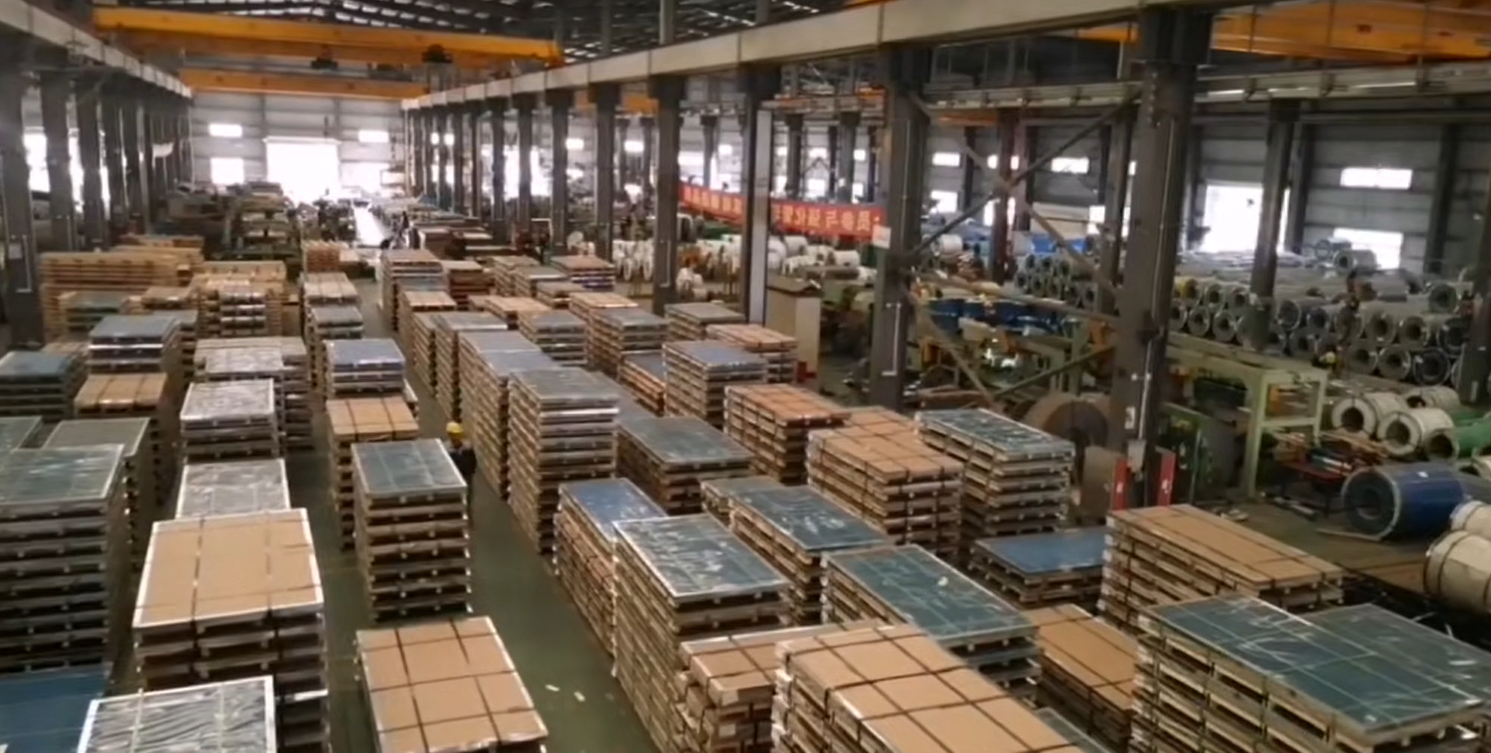
Sample coils are cut and inspected at mill level before dispatch, so the width and gauge agreed in the RFQ can be confirmed physically.
Have Questions or Need More Details?
Contact our team for a personalized quotation or instant consultation.
Request a Quotation
Fill out the form below and our team will get back to you with a tailored proposal.
WhatsApp Direct Chat
Prefer to chat in real-time? Message us on WhatsApp for instant assistance & quick answers.
- Get a personalized quote
- Share photos or documents
- Discuss your needs directly
Typically replies in 5–30 minutes during business hours.