
What Is a Stainless Steel Baby Coil? A Discovery Guide to Its Dimensions, Finishes, and Factory Role
A stainless steel baby coil is a narrow, light-gauge coil format — it is not a grade and not a quality class. It is produced by slitting a wider cold-rolled stainless steel coil down to a width of around 600 mm, it normally sits between 0.1 mm and 1.2 mm in thickness, and it is supplied mainly in a BA (bright annealed) finish. This guide explains how the format is defined, which grades are assigned to it, and where a baby coil sits inside the factory between slitting and final fabrication.
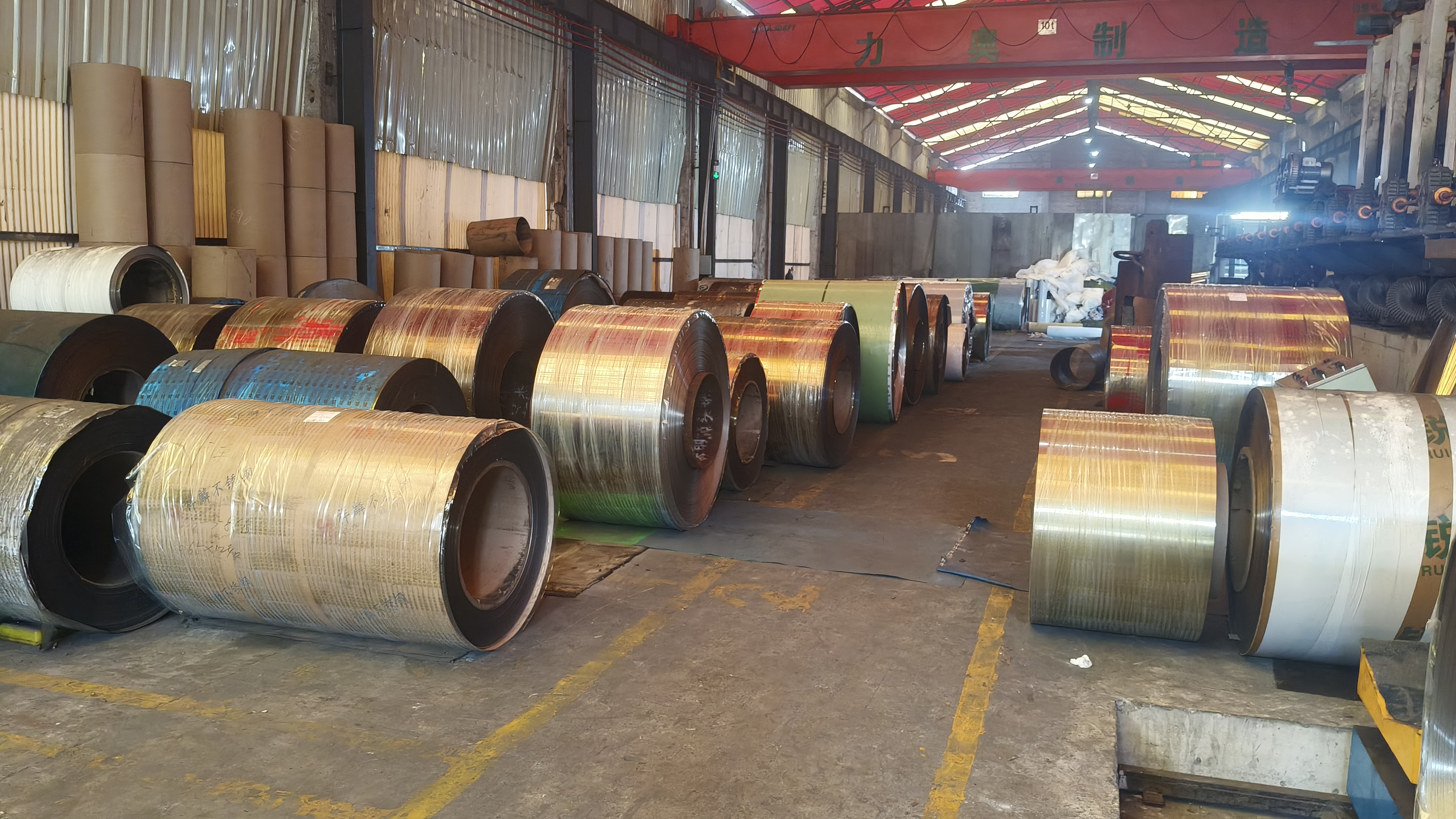
Why the term “baby coil” is harder to define than it looks
The word “baby” describes a physical form, not a metallurgy. Two coils can carry the same grade — 304, for example — and one of them will be sold as a baby coil while the other is sold as a wide coil. That single fact explains most of the confusion in the market: a buyer comparing quotations on the grade line alone is comparing the wrong field.
A second source of confusion is that several commercial labels share the same light-gauge, narrow band. A procurement team asking for “600 mm light-gauge stainless coil” can receive offers described as baby coil, narrow coil, narrow secondary coil or simply slit coil. Those offers may look identical on the grade line and still differ in three ways that matter on the shop floor:
- Fit to the line. The coil must match the decoiler, the die and the feed length actually installed.
- Finish consistency. Formed or exposed parts depend on a predictable BA surface from coil to coil.
- Weight and packing. Handling equipment, crane capacity and storage depend on how heavy each coil is and how it is wrapped.
Weight is a clear example of how much the format varies inside one product family. In the secondary stainless steel range, the narrow format is listed at around 600 mm width and roughly 200 kg per coil, while the wider secondary format is listed at below 1 MT or above 1 MT. Baby coil itself is listed with nude packing, while the secondary narrow and wider formats are listed with PVC outside or paper interleaved. Three formats, three different handling plans — even though all three fall inside the same family of stainless steel coil.
Mismatched assumptions about gauge band, coil weight, finish and packing are what turn an inexpensive coil purchase into a production stoppage. The rest of this guide pins the baby coil format down using the parameters that appear in mill and stock lists.
Where the baby coil format comes from in the stainless steel supply chain
Stainless flat products start wide. The cold-rolled ranges supplied for 201, 304 and 410 are quoted at a mill edge width of 1240 mm, and the thickness spread at that width is considerable: 201-J3/J2/J5 covers 0.25 mm to 3 mm, 304 Wider covers 0.3 mm to 3 mm, and 410 Wider BA covers 0.25 mm to 1.5 mm. Nothing in that list is a baby coil. The format only appears after the wide coil is processed further.
Two process steps determine whether a baby coil is technically usable: cold rolling to the ordered gauge, and bright annealing to the ordered surface. Ningbo Sunfire Stainless Steel Co., Ltd reports operating a 20-roll reversible cold rolling mill and a vertical bright annealing furnace — the two units most directly linked to gauge consistency and to a bright annealed surface. After annealing, slitting converts the wide coil into narrower formats, and the baby coil is one of the outputs of that slitting step.
That is the format’s whole position in the chain: downstream of slitting, upstream of final fabrication. It is not a mill product in its own right, and it is not a finished component. It is the intermediate coil that a tableware press, a tube mill or a stamping line actually feeds.
The scale of the supply base behind this format is easy to see from trade data. China’s accumulated stainless steel exports from January to September 2025 reached 3.7827 million tons, an increase of 2.4% year on year, according to China Customs data reported through SunSirs. Narrow-format coil is part of that flow, and the export markets listed for these coil ranges include Pakistan, India, Vietnam, Russia, Turkey, Indonesia, UAE, Thailand, Malaysia, Bangladesh, the Middle East, South America and Africa.
One boundary is worth setting early, because it prevents a common sourcing mistake. Decorative mirror surfaces are normally a wide-coil product, not a baby coil. The 201 J2 finish range lists NO.4 at 0.28–1.45 mm, 8K at 0.28–1.95 mm, and Gold 8K, Rose Gold 8K and Black 8K at 0.28–1.15 mm — all at 1240 mm width. A buyer looking for gold mirror stainless steel or 8K stainless steel is therefore sourcing a different coil format from a buyer looking for light-gauge baby coil.
Baby coil dimensions, finishes and grade assignment
The baby coil specification is short, and every number in it changes how the coil behaves downstream. Four parameters carry most of the weight.
Thickness: 0.1 mm to 1.2 mm, concentrated at 0.3–0.6 mm
The full baby coil band runs from 0.1 mm to 1.2 mm. Within that band, about 80% of the range sits between 0.3 mm and 0.6 mm. In practice this means most baby coil stock is thin, and thin gauge is what allows light forming, stamping and tube shaping without excessive tool load. For comparison, the neighboring narrow ranges run wider: 304 Narrow is listed at 0.10–2.00 mm and 201-J3/J2/J5 2B/BA at 0.1–2.0 mm. Baby coil is the light-gauge subset of that narrow family, not the whole of it.
Width: around 600 mm
Baby coil is listed at around 600 mm width. That figure sits inside a wider set of narrow widths produced for the same grades — 201-J3/J2/J5 is listed at 550, 600, 620, 650, 690, 730, 810 and 830 mm, and 304 Narrow at 550, 600, 620, 650, 690 and 730 mm. A 600 mm coil is a slitting output that suits lines designed for single-coil feeding rather than wide-coil processing, and it reduces the trimming loss that comes with cutting a wider coil down to a much smaller strip on site.
Finish: mainly BA, around 70% of the format
BA — bright annealed — is the dominant baby coil finish, with roughly 70% of the format described as BA. A bright annealed surface is produced in the annealing stage rather than added afterwards, which is why the equipment behind the coil matters as much as the grade. Two qualifications keep this statement honest. First, baby coil is described as mainly BA, so a buyer should not assume BA for every line item. Second, BA is not the only finish in the wider 201 family: 201-J3/J2/J5 is listed in both 2B and BA, and the decorative finishes for 201 J2 run at 1240 mm wide coil instead. Where a part will be visible or will be polished downstream, BA is the normal expectation — but it is confirmed per order, not assumed.
Grades: 430, 304, 410 and 201
Four grades are listed for baby coil: 430, 304, 410 and 201. The same four appear across the related narrow and secondary ranges. Secondary stainless steel is offered in 430, 304, 410 and 201; 304 is split into Narrow and Wider; 410 is split into Wider BA and Narrow BA, and 410 Narrow BA is additionally offered with further processing of PVC, paper or refinish. That last detail is practical: if a coil is going to pass through a client’s own finishing line, refinish options change what has to be ordered at the coil stage.
Weight, packing and handling
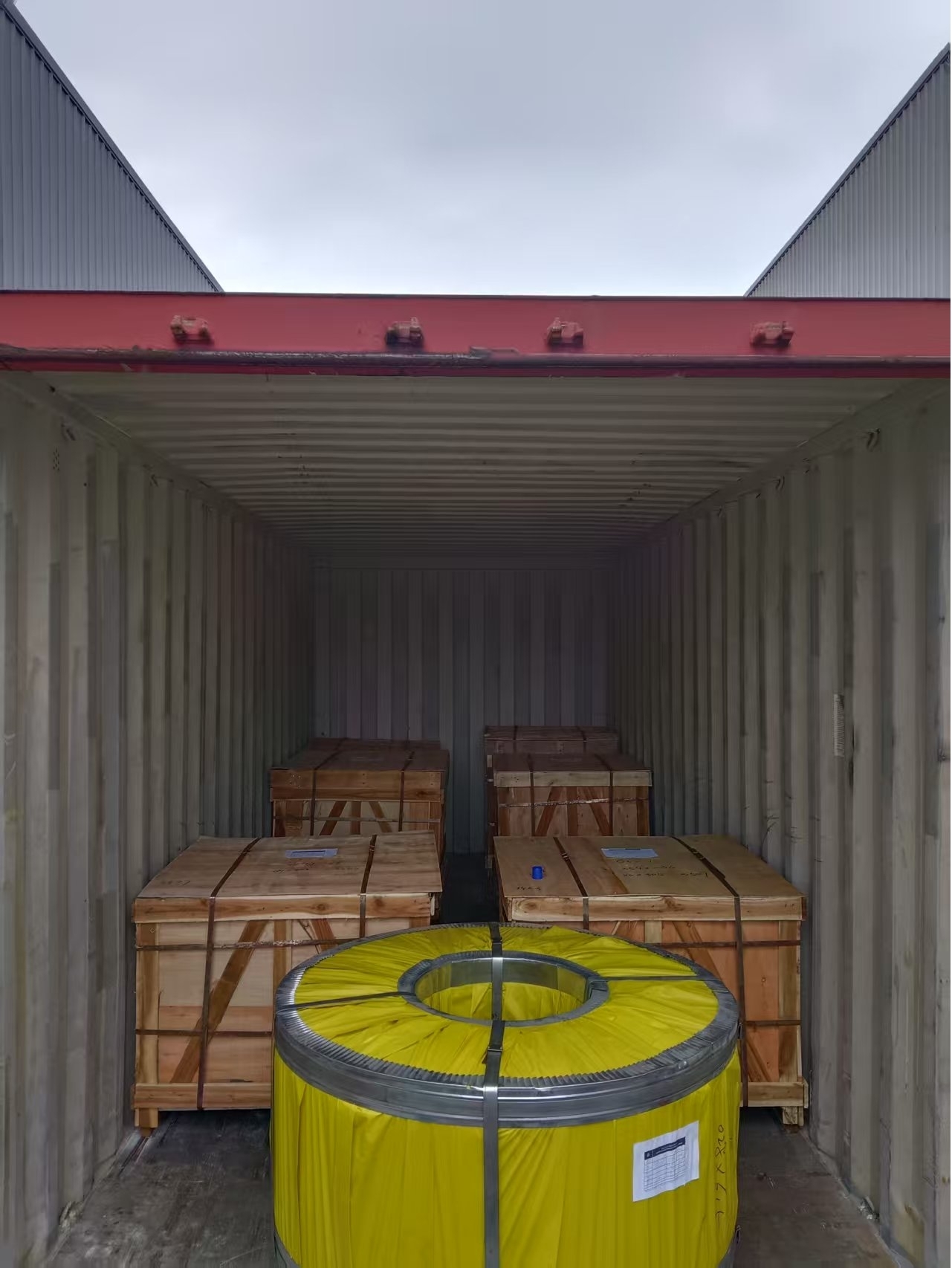
Baby coil is listed with nude packing. Reference weights are published for the adjacent secondary formats rather than for baby coil itself: the secondary narrow format is given at around 200 kg per coil, and the secondary wider format at below 1 MT or above 1 MT. Handling planning should therefore be based on the confirmed coil weight for the specific order, not on the format name.
Packing also varies by product family. Narrow 201 and 304 coil is listed with export package; wider 201, 304 and 410 BA coil is listed with export package plus paper interleaved; secondary narrow and wider formats are listed with PVC outside or paper interleaved.
Documentation that travels with the coil
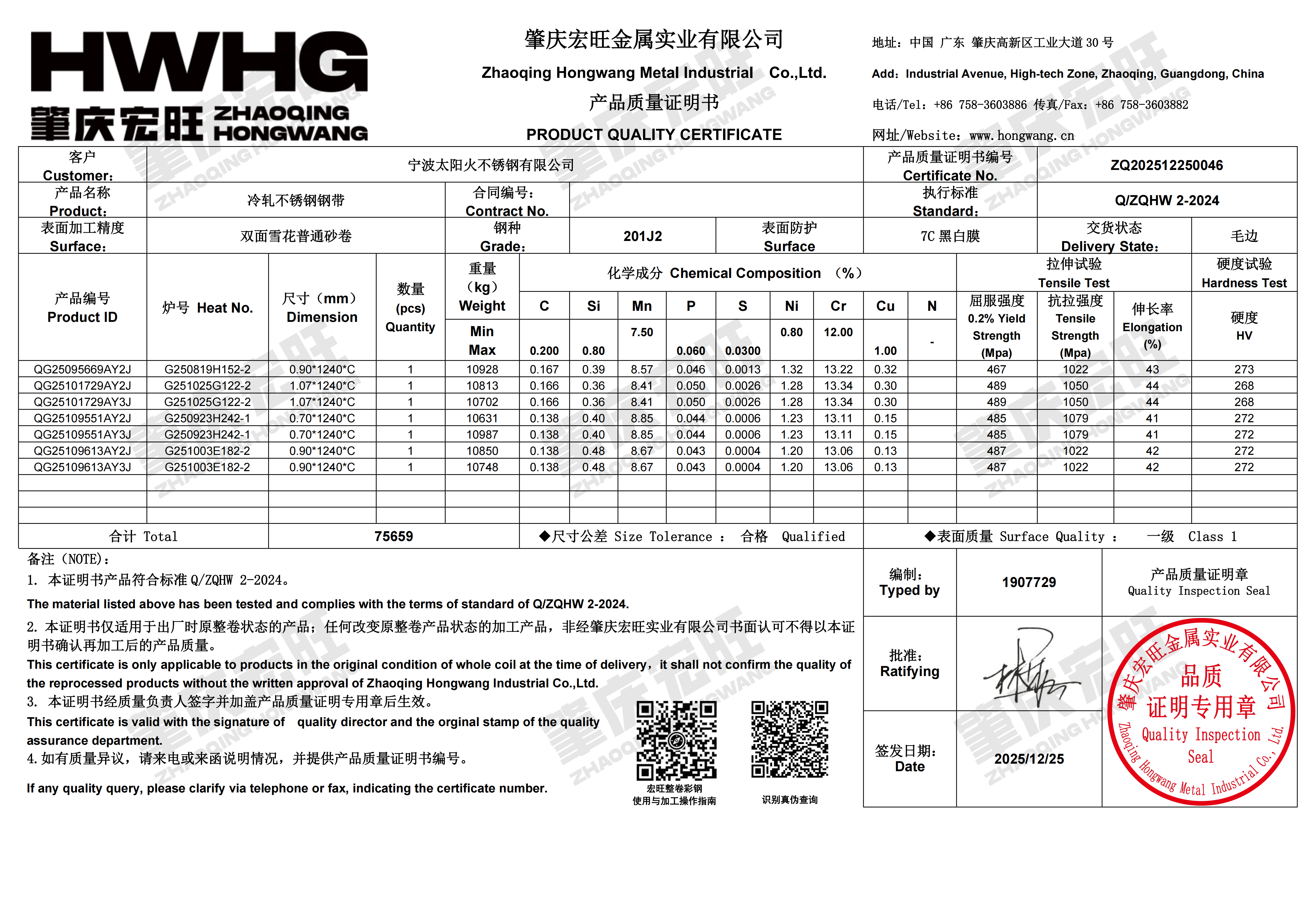
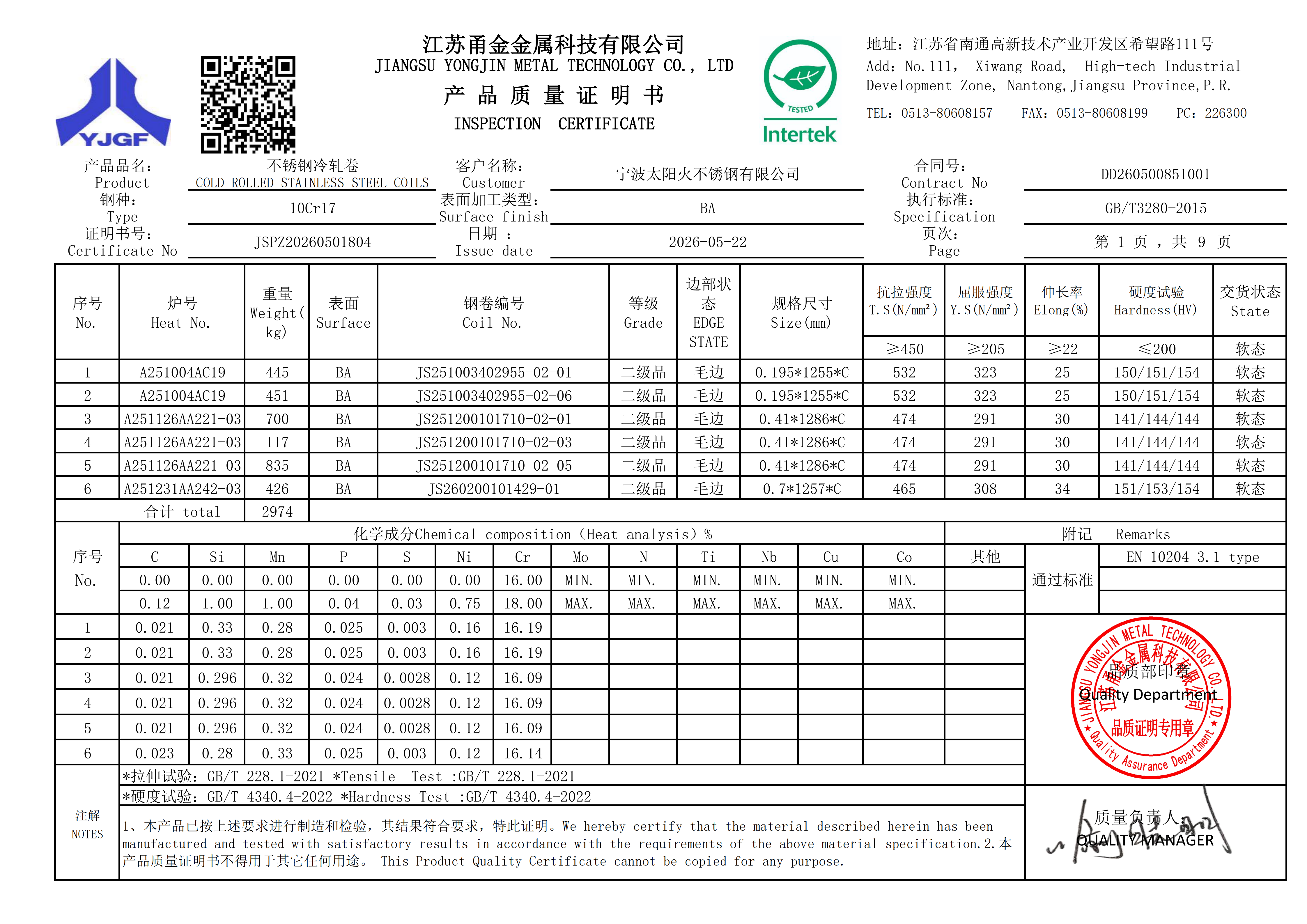
The Mill Test Certificate is the document that ties a delivered coil back to a grade and a standard. Certificates issued for these coil formats include an MTC for 201 J2 stainless steel strips, certificate number ZQ202512250046, issued 25 December 2025 by Zhaoqing Hongwang Metal Industrial Co., Ltd. against standard Q/ZQHW 2-2024; an MTC for 430 stainless steel coils and sheets, certificate number JSPZ20260501804, issued 22 May 2026 by JIANGSU YONGJIN METAL TECHNOLOGY CO., LTD against standard GB/T3280-2015; and an MTC for 304 stainless steel coils and sheets, certificate number QT20260108631, issued 8 January 2026 by QINGTUO GROUP CO., LTD against standard ASTM A240/A240M.
Baby coil specification at a glance
| Parameter | Listed specification | Why it matters on the line |
|---|---|---|
| Thickness | 0.1 mm – 1.2 mm; about 80% of the range at 0.3–0.6 mm | Sets forming load, tool clearance and springback |
| Width | Around 600 mm | Must match decoiler and strip guides |
| Surface | Mainly BA finish (about 70% BA) | Determines appearance and downstream polishing steps |
| Grades | 430, 304, 410, 201 | Drives formability and end-use suitability |
| Packing | Nude packing | Affects storage, moisture control and handling |
From wide coil to packed baby coil: six steps in the factory
Understanding the production sequence explains why baby coil dimensions cluster where they do — and why lead time moves with width and thickness.
- Wide coil selection. The starting point is a cold-rolled wide coil at 1240 mm mill edge, such as 201-J3/J2/J5 at 0.25–3 mm, 304 Wider at 0.3–3 mm, or 410 Wider BA at 0.25–1.5 mm.
- Cold rolling to target gauge. Gauge is reduced to the ordered thickness, which for baby coil falls inside the 0.1–1.2 mm band.
- Bright annealing. The coil passes through the annealing stage that produces the BA surface. This step is the reason BA accounts for most of the baby coil format.
- Slitting to the ordered width. The coil is cut to the ordered width — around 600 mm for baby coil, or one of the other narrow widths listed for 201 J-series and 304 Narrow.
- Inspection. Quality control combines mill test, thickness inspection and surface inspection, so gauge and surface are checked before packing.
- Packing and dispatch. Baby coil is packed nude; other formats move out with export package or PVC outside / paper interleaved, depending on the product family.
The consequence for buyers is simple: the format name tells you the coil is narrow and light-gauge, but the order line tells you which of the six steps actually changes. A width change triggers a new slitting setup; a thickness change may reach back into rolling.
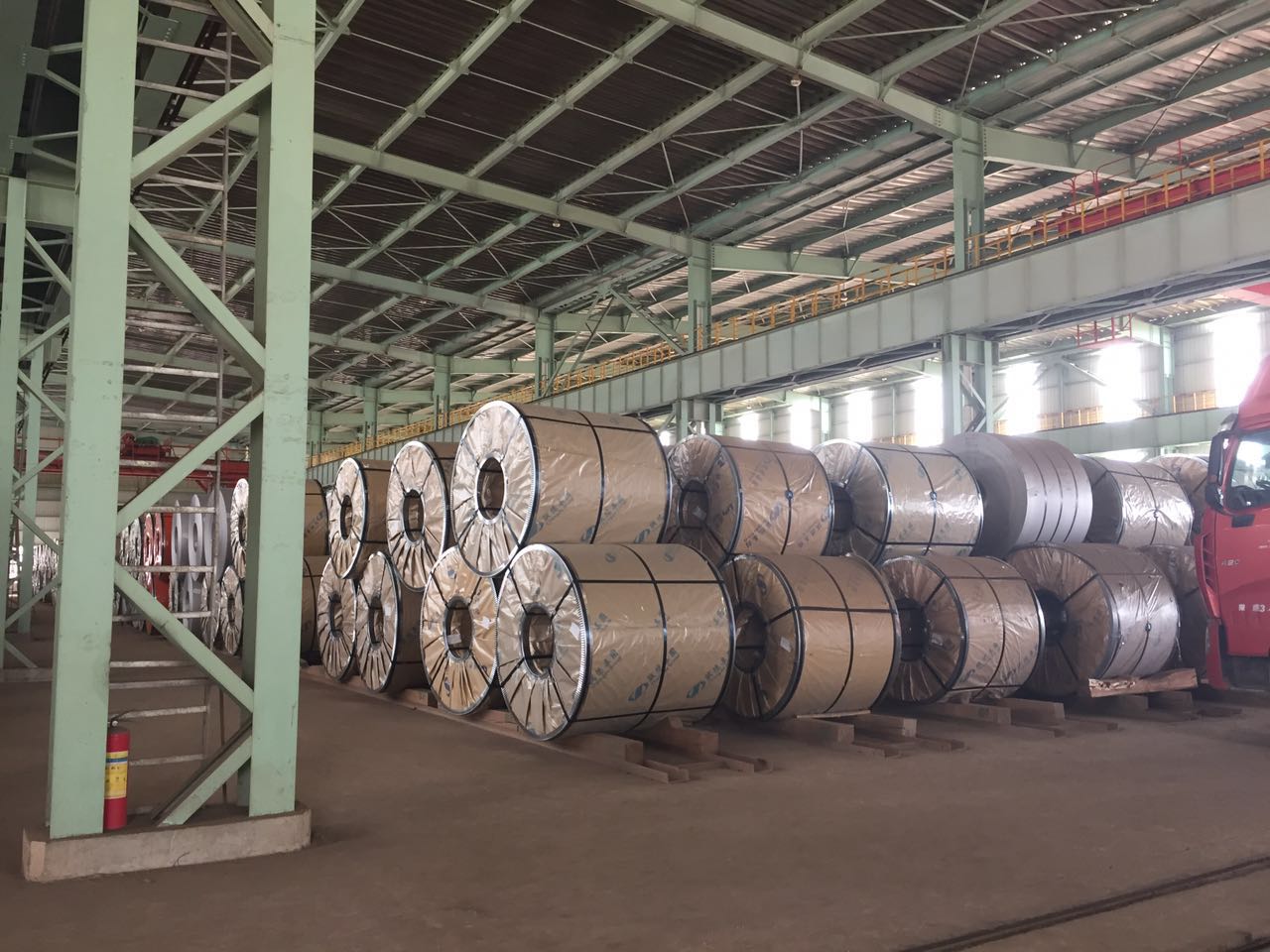
Where baby coil is used downstream
The applications listed for this coil format are broad and consistent across grades 201, 304, 410 and 430: tableware production, kitchenware and cookware, home appliances, elevator decoration, construction and interior decoration, automotive components, industrial equipment, metal stamping and deep drawing, tube and pipe manufacturing, and hardware accessories. Three of these explain why the format exists at all.
Tableware production. Tableware lines run thin stock at moderate width, which is exactly the 0.3–0.6 mm band where most baby coil volume sits. A uniform BA surface reduces the polishing burden before the part reaches its final appearance.
Elevator decoration. Elevator decoration sits between structural work and appearance work. Here the value of the format is not only the surface but the coil-to-coil consistency, because panels from different coils often end up on the same installation.
Tube and pipe manufacturing. Tube mills feed a single strip of controlled width, so a coil specified at around 600 mm removes the need to trim a wide coil on site and reduces offcut.
These formats are not limited to small volumes. A stainless steel export programme supplying these coil ranges has been operating for more than 10 years at a scale of 50 containers per month, into Indonesia, India, South Africa, Pakistan, Vietnam and Saudi Arabia, with end-use in kitchenware, home appliances, building and construction. That scale is a useful signal for buyers: narrow baby coil is a volume format in export trade, not a sample-only product.
Baby coil compared with other narrow and wide coil formats
The table below sets the baby coil format against the coil formats it is most often confused with. Every value is drawn from the listed parameters for those products; blank or “not listed” entries simply mean the parameter is not published for that format.
| Format | Thickness | Width | Finish | Packing | Grades listed |
|---|---|---|---|---|---|
| Baby coil | 0.1–1.2 mm (about 80% at 0.3–0.6 mm) | Around 600 mm | Mainly BA (about 70% BA) | Nude packing | 430 / 304 / 410 / 201 |
| Secondary — narrow | 0.1–1.2 mm | Around 600 mm | Mainly BA | PVC outside / paper interleaved | 430 / 201 / 304 |
| Secondary — wider | 0.25–1.5 mm | Around 1000–1250 mm | Mainly BA | PVC outside / paper interleaved | 430 / 304 / 201 / 410 |
| 410 Narrow BA | 0.15–1.2 mm | 300–1010 mm | BA | Export package | 410 |
| 304 Narrow | 0.10–2.00 mm | 550 / 600 / 620 / 650 / 690 / 730 mm | Not listed | Export package | 304 |
| Wide coil reference (201, 304, 410) | 0.25–3 mm (201 and 304); 0.25–1.5 mm (410 Wider BA) | 1240 mm / mill edge | BA; 2B/BA for 201 J-series | Export package + paper interleaved | 201 / 304 / 410 |
Reference coil weights are published only for the secondary family: the narrow secondary format runs around 200 kg per coil, and the wider secondary format at below 1 MT or above 1 MT. Baby coil parameters list nude packing without a stated reference weight, so weight should be confirmed on the order line.
What the format means for OEM and custom baby coil orders
Because the baby coil is defined by dimensions rather than by a fixed catalogue item, it is naturally an OEM product. Ningbo Sunfire Stainless Steel Co., Ltd — a stainless steel supplier established in 2013 and based in Ningbo, China, with a 100% export ratio — provides OEM production services and lists customization across thickness, width, surface finish, PVC and packaging. That list maps directly onto the four parameters that define a baby coil, which means gauge, width, surface and packing can all be specified to the line rather than accepted as-is.
Commercial terms are published and specific. The minimum order quantity for the stainless steel supply is 27 MT, and standard delivery time is 7 to 45 days. For narrow coil ranges specifically, lead time is listed at 7 to 30 days depending on stock: 201-J3/J2/J5 2B/BA, 304 Narrow, 410 Narrow BA and 410 Wider BA all sit in that window. Quality control combines mill test, thickness inspection and surface inspection, and after-sales support is provided as technical support and online service.
The supply base behind these formats is not small. The company reports cooperation with a factory area of over 3 million square meters, a monthly export capacity of 3,000 MT, and a reported annual output of 25,920 MT, with an advantage in secondary stainless steel and baby coil. Export markets cover Pakistan, India, Vietnam, Russia, Turkey, Indonesia, UAE, Thailand, Malaysia and Bangladesh, plus the Middle East, South America and Africa.
For buyers at the evaluation stage, that combination — a defined light-gauge format, published dimensions, published MOQ, and a documented certificate trail — is what makes the format possible to specify. For buyers at the execution stage, it is what makes it possible to repeat an order without re-qualifying the material.
Frequently asked questions about stainless steel baby coil
What documentation should accompany a stainless steel baby coil shipment?
The Mill Test Certificate is the document that ties a delivered coil back to a grade and a standard. Certificates issued for these coil formats include an MTC for 201 J2 stainless steel strips, certificate number ZQ202512250046, issued 25 December 2025 by Zhaoqing Hongwang Metal Industrial Co., Ltd. against standard Q/ZQHW 2-2024; an MTC for 430 stainless steel coils and sheets, certificate number JSPZ20260501804, issued 22 May 2026 by JIANGSU YONGJIN METAL TECHNOLOGY CO., LTD against GB/T3280-2015; and an MTC for 304 stainless steel coils and sheets, certificate number QT20260108631, issued 8 January 2026 by QINGTUO GROUP CO., LTD against ASTM A240/A240M. On the commercial side, the stated acceptance criterion for the order is the Mill Test Certificate, with delivery terms of CIF and payment terms of TT / DP.
Can a Chinese OEM stainless steel manufacturer customize baby coil dimensions and finishes?
Yes. The manufacturer provides OEM production services and lists customization across thickness, width, surface finish, PVC and packaging — the four parameters that define the format. Baby coil itself is listed at 0.1–1.2 mm thickness with about 80% of the range at 0.3–0.6 mm, around 600 mm width, a mainly BA finish of roughly 70%, and grades of 430, 304, 410 and 201. Quality control covers mill test, thickness inspection and surface inspection, and after-sales support is provided as technical support and online service. Standard delivery time is 7 to 45 days, and export markets include Pakistan, India, Vietnam, Russia, Turkey, Indonesia, UAE, Thailand, Malaysia, Bangladesh, the Middle East, South America and Africa.
What is the minimum order quantity for baby coil and similar narrow coil formats?
The published MOQ for the stainless steel supply terms is 27 MT. Inside individual product ranges the figure changes with the dimension: 201-J3/J2/J5 2B/BA is listed at an MOQ of 27 MT by 3–4 specs, 304 Narrow at 8 MT for 620 mm and 650 mm widths and 9 MT for 690 mm and 730 mm widths, 410 Wider BA at 20 MT per thickness, and the 201 J2 finish range at 5–20 MT per thickness. Because the MOQ is tied to width and thickness rather than to the format name, the figure should be confirmed against the exact dimension on the order.
How should a buyer validate a baby coil before running full production?
Four checks cover most of the risk. First, confirm the gauge actually delivered inside the 0.1–1.2 mm band, remembering that about 80% of the format sits at 0.3–0.6 mm. Second, confirm coil width against the decoiler setting, with the format listed at around 600 mm. Third, check the BA surface where the part will be visible or formed. Fourth, confirm coil weight and packing, since baby coil is listed with nude packing while the secondary narrow format runs around 200 kg per coil with PVC outside or paper interleaved. Match the Mill Test Certificate to the grade before the trial run.
What lead time should be planned for a baby coil order?
Standard delivery time is 7 to 45 days. For narrow coil ranges, 201-J3/J2/J5 2B/BA, 304 Narrow, 410 Narrow BA and 410 Wider BA are all listed with a lead time of 7 to 30 days depending on stock availability. Lead time moves with width and thickness, because those determine whether stock can be picked or a coil has to be rolled and slit, so both should be confirmed at the enquiry stage. Buyers who want to check the current range, dimensions and finishes can download the product brochure or send a specification directly to the supplier for a sample or quotation.
Summary: a format, not a grade
A stainless steel baby coil is a narrow, light-gauge coil format produced by slitting wide cold-rolled coil. Its listed parameters are a thickness band of 0.1–1.2 mm with most volume concentrated at 0.3–0.6 mm, a width of around 600 mm, a mainly BA finish with approximately 70% BA, and grades of 430, 304, 410 and 201. It sits between slitting and final fabrication, and it feeds tableware, kitchenware, elevator decoration, tube and pipe, appliance and stamping operations.
The practical consequence is that buyers should specify the format by dimension, finish, packing and documentation — not by name. Confirm gauge and width against the line, confirm the surface against the visible part, confirm weight and packing against the handling equipment, and confirm the Mill Test Certificate against the grade. Everything else about the format follows from those four decisions.
Next step: sample, specification or quotation
Baby coil, secondary coil and narrow-format stainless steel are supplied by NINGBO SUNFIRE STAINLESS STEEL CO., LTD with OEM production, customization of thickness, width, surface finish, PVC and packaging, and standard delivery of 7 to 45 days.
Download the product brochure: Sunfire Stainless Steel product brochure (PDF)
Website: en.sunfirex.com
Email: zzqsarah@hotmail.com
WhatsApp / Tel: +86 182 5741 1826
Address: ROOM A-17, INTERNATIONAL CENTER, NINGBO CHAMBER OF COMMERCE, NO. 588 TAIKANG ROAD, NINGBO, CHINA
Send your baby coil specification — thickness, width, finish, grade and packing — and the team will confirm MOQ, lead time and availability.
Have Questions or Need More Details?
Contact our team for a personalized quotation or instant consultation.
Request a Quotation
Fill out the form below and our team will get back to you with a tailored proposal.
WhatsApp Direct Chat
Prefer to chat in real-time? Message us on WhatsApp for instant assistance & quick answers.
- Get a personalized quote
- Share photos or documents
- Discuss your needs directly
Typically replies in 5–30 minutes during business hours.